
- Chapter 1: Philosophy and Fundamentals of Self-Steering Windvanes
- Chapter 2: Technical Classification of Systems
- Chapter 3: Detailed Analysis by Brand and Model
- Chapter 4: Operation of Servo-Mechanical Amplification
- Chapter 5: Benefits and Operational Advantages
- Chapter 6: The "Achilles' Heel" and Structural Failures
- Chapter 7: Critical Danger of Large-Span Wind Vanes
- Chapter 8: Lessons from the Golden Globe Race (GGR)
- Chapter 9: Conclusions and Selection Guide
- Chapter 10:The Myth of Force: Which System Has More Steering Power?
Self-Steering Windvanes: Types, Systems, and Selection Guide
Technology, Classification and Performance Analysis in Ocean Navigation
Table of Contents
Chapter 1: Philosophy and Fundamentals of Self-Steering Windvanes
.


Ocean sailing, especially when undertaken solo or with a reduced crew, critically depends on the ability to maintain a steady course without the exhausting and continuous physical intervention of the helmsman. John Letcher, in his fundamental treatise, defines self-steering not as a mere technical convenience or a luxury for cruising, but as an essential element of survival, autonomy, and freedom at sea. For a solo sailor, steering can consume up to 16 hours a day. A self-steering windvane gives this vital time back, allowing the sailor to rest in a warm bunk, eat properly, and maintain a more effective watch, transforming what could otherwise be an agonizing test of endurance into a more controlled and manageable passage.
In operational terms, a self-steering windvane is an expert-level "extra crew member": a helmsman who does not eat, does not sleep, does not draw electrical power from the batteries, and, unlike humans, does not complain in the most adverse weather conditions. While motorboats commonly rely on electronic autopilots, the term "self-steering" is closely associated with sailing, reflecting the sailor's perception of the vessel as a living entity capable of finding its own way. A self-steering windvane reinforces this connection, acting as a tireless servant that keeps the boat in harmony with the forces of nature, allowing the vessel to appear almost alive and aware of its course, even in rough seas.
1.1. Preservation of Crew Integrity
Beyond its mechanical precision, the self-steering windvane fulfills a fundamental safety function: it helps preserve the physical and mental integrity of the crew by reducing the need for constant exposure to the elements. Fatigue is a major contributing factor in many offshore accidents. By delegating the task of steering to a mechanical system that "does not mind sitting out in bad weather," human fatigue and physical wear are significantly reduced. This allows the sailor to remain in a sheltered, dry, and warm environment inside the cabin, helping to conserve body heat and maintain the mental alertness required for sound decision-making.
From a practical safety perspective, the benefits are considerable. A crew member who does not have to physically fight the wheel or tiller for hours in the rain or spray is better able to dedicate their energy to strategic watchkeeping: monitoring radar, studying weather patterns, and anticipating potential hazards. Reduced exposure to harsh environmental conditions helps prevent hypothermia and exhaustion, both of which can contribute to critical navigation errors. In this sense, the self-steering windvane acts as a passive safety shield, allowing the crew to remain sheltered rather than being continuously exposed at the stern in heavy sea conditions.
1.2. Balance as a Safety Principle
The fundamental guiding principle is balanced sailing. A successful self-steering system does not rely on brute force, but on the harmony between the aerodynamic forces generated by the sails and the hydrodynamic forces acting on the hull. A properly trimmed boat requires minimal corrective force to maintain its course; the self-steering windvane can then respond effectively to disturbances caused by waves and changes in wind pressure. As the lessons of the Golden Globe Race (GGR) demonstrate, when a self-steering windvane fails, the consequences can be severe: the sailor is forced to hand-steer in demanding conditions, which can quickly lead to exhaustion and significantly increase the risk of losing control of the vessel.
It is vital to understand that a self-steering windvane is also a master of seamanship: if the system struggles excessively, it is often a clear sign that the sailboat is poorly balanced. By adjusting the sail trim to reduce excessive rudder pressure and weather helm, the sailor improves not only course-keeping performance but also the mechanical and structural integrity of the steering system. Proper balance therefore enables more efficient, sustainable, and safer long-term ocean sailing.
Chapter 2: Technical Classification of Self-Steering Systems
.
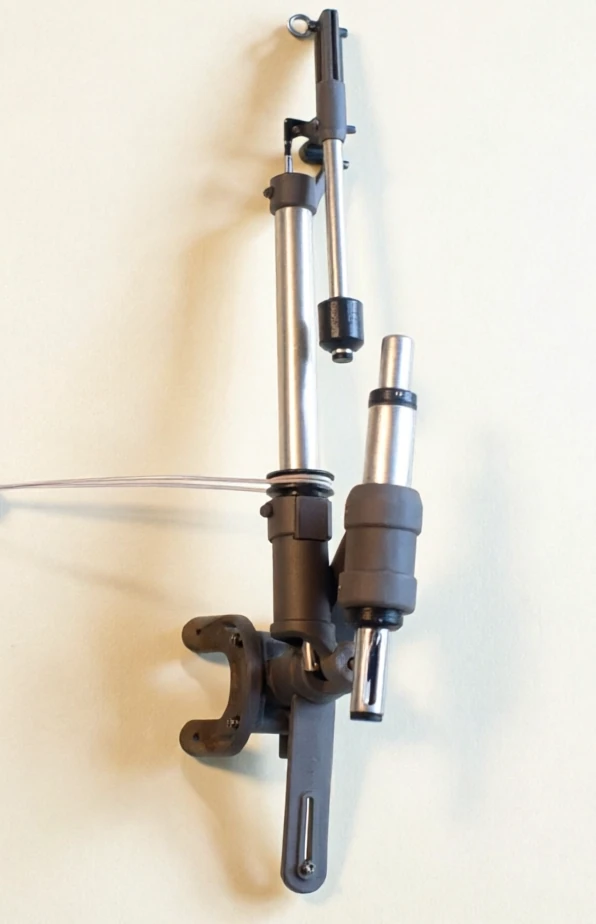
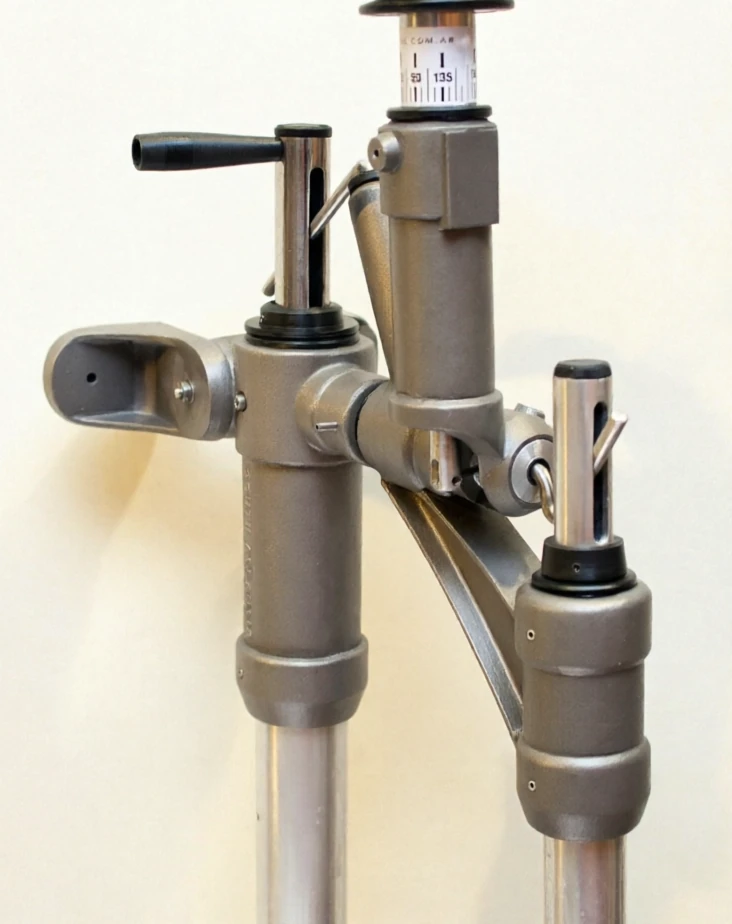
Unlike electronic autopilots, which typically rely on sensors such as a magnetic compass, GPS, or other electronic instruments, mechanical self-steering systems operate without electrical power and are primarily classified according to their method of actuation and the steering surface they use to control the boat. The following classification describes the three main operating principles represented by the mechanical self-steering systems most commonly used today. While other designs and variations have existed throughout the history of windvane self-steering, these three principles encompass the systems most widely encountered in modern ocean sailing.
1. Servo-Pendulum Systems
These are among the most powerful and widely used mechanical self-steering systems today. They use a submerged blade, known as a pendulum oar, which rotates around its vertical axis in response to movement of the windvane. As the pendulum blade is deflected from the direction of water flow, the resulting hydrodynamic force generates substantial leverage, causing the pendulum oar to swing to one side. This movement is transmitted through lines to the boat's main steering system, operating either the tiller or the wheel and, consequently, the main rudder.
The key characteristic of a servo-pendulum system is that the pendulum blade itself does not normally steer the boat directly. Instead, it acts as a servo mechanism, using the energy of the water flowing past the moving boat to generate the force required to control the main rudder. This principle provides considerable steering power while requiring only a relatively small input from the windvane.
2. Auxiliary Rudder Systems
Auxiliary rudder systems provide a high degree of independence from the boat's primary steering system. They incorporate a separate rudder blade that is mechanically controlled by the windvane and does not rely on the boat's main rudder to maintain the desired course. The main rudder is normally locked in a neutral or suitably trimmed position, while the auxiliary rudder assumes the responsibility for steering the vessel.
One of the main advantages of this configuration is steering independence and redundancy. Because the windvane operates its own rudder, the system can continue to steer the boat even if the main steering system is damaged or unavailable. Depending on the design, the auxiliary rudder may also serve as an emergency steering solution, making this configuration particularly attractive for long-distance and ocean sailing.
3. Trim-Tab Systems (Servo-Tab)
Trim-tab systems, also known as servo-tab systems, use a small control surface or flap mounted on the trailing edge of a rudder, either the boat's main rudder or, in some designs, an auxiliary rudder. The windvane moves the trim tab rather than directly moving the main rudder. The hydrodynamic force generated by the tab then causes the larger rudder to move, producing the steering action required to maintain the boat's course.
The main advantage of this principle is its ability to amplify the relatively small force generated by the windvane into a much greater steering force through hydrodynamic action. This type of system has a long history in ocean sailing and was used by some of the legendary sailors of the golden age of offshore sailing, including Bernard Moitessier.
Chapter 3: Detailed Analysis by Brand and Model
.

The current market offers a diversity of engineering solutions.
South Atlantic: Versatility and Segmentation
The firm South Atlantic distinguishes itself by offering specific solutions for each displacement and boat configuration:
- Servo-Pendulum Range:
- S 301: Designed for boats up to 3 tons. It is the standard of the Globe 5.80 class for its lightness and quick response.
- S 440: For vessels from 30 to 40 feet (up to 10 tons).
- S 470: Its most robust servo-pendulum model for yachts up to 20 tons.
- Auxiliary Rudder / Emergency Range:
- S 500: Up to 10 tons, integrating emergency rudder capability.
- S 600: Designed for large ocean cruisers up to 20 tons.
- HF 450: Specialized system for vessels up to 14 tons.
Windpilot:
The German firm of Peter Förthmann has developed efficient, well-designed, and structurally well-established systems:
- Pacific / Pacific Light: Pure servo-pendulum systems. Their design allows a 270-degree arc of movement, which prevents impacts against rigid stops in case of knockdowns.
- Pacific Plus: This is an auxiliary rudder that uses a servo-pendulum mechanism to actuate its own independent blade. It is ideal for boats with hydraulic steering.
Hydrovane:
The Hydrovane is a well-known auxiliary rudder system. It does not use the servo effect of water, but instead relies on the torque generated by a very large-sized wind vane to directly move its independent rudder.
Like the Windpilot Pacific Plus or the South Atlantic S 500 or S 600, emergency rudders, are valued as a "life insurance" that allows navigation after total loss of the main rudder.
Chapter 4: The Operation of Servo-Mechanical Amplification
.

The fundamental technical challenge of a self-steering windvane is that the signal generated by the windvane itself—the aerodynamic force or torque produced by the vane—is generally too weak to move a rudder directly when the boat is under load. The solution is mechanical amplification: a small movement of the windvane must be transformed into a much greater steering force.
In a servo-pendulum system, the windvane only needs to deflect the pendulum blade by a few degrees. Once the blade is angled relative to the flow of water, the movement of the boat through the water generates a substantial hydrodynamic force on the blade. This force swings the pendulum oar and is then transmitted mechanically to the boat's main rudder through lines connected to the tiller or wheel. The boat's forward speed therefore provides the energy required for the servo effect, allowing a relatively small aerodynamic input to control a much larger steering load.
In auxiliary rudder systems such as the Hydrovane, the windvane acts directly on the independent auxiliary rudder. The steering force is generated primarily by the aerodynamic force acting on the relatively large windvane surface, which is transmitted mechanically to the auxiliary rudder. Because there is no separate hydrodynamic servo mechanism amplifying the input, the available steering force is more directly dependent on the aerodynamic force generated by the windvane and therefore on the apparent wind conditions.
Other auxiliary rudder systems, such as the Windpilot and South Atlantic, combine an independent auxiliary rudder with a servo-assisted mechanism. In these systems, the windvane provides the steering signal, while the servo mechanism uses hydrodynamic forces generated by the boat's movement through the water to amplify that signal and increase the steering torque available at the auxiliary rudder. This mechanical amplification allows the system to respond effectively without relying solely on the aerodynamic force generated by the windvane, providing greater steering authority across a wider range of sailing conditions.
Chapter 5: Benefits and Operational Advantages
| Overview | Feature | Self-Steering Windvanes Advantage |
|---|---|---|
|
Electrical Consumption | 0 Amps. Allows energy to be allocated to Starlink, watermakers, and refrigeration. |
| Redundancy | Acts as an emergency rudder (auxiliary models from South Atlantic, Windpilot, and Hydrovane). | |
| Silence | Eliminates the constant hum of electric motors, reducing crew stress. | |
| Durability | Pure mechanics repairable at sea with basic tools. |
Chapter 6: The "Achilles' Heel" and Structural Failures
.
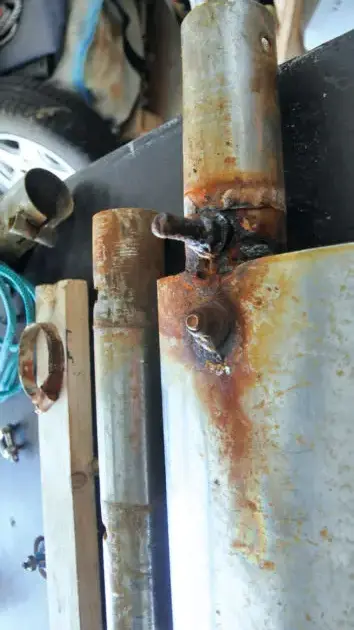

Despite their generally robust construction, self-steering systems are exposed to extreme loads in severe ocean conditions, which can reveal critical weaknesses in their design and construction. The 2018 Golden Globe Race (GGR) provided a particularly clear demonstration of the critical role these systems play in the survival and safety of solo sailors, as well as the consequences that can arise when a self-steering system fails in remote and demanding waters.
- "Break-Tube" Failures: Some Monitor systems incorporate sacrificial break tubes designed to fail under excessive loads, protecting more critical components from damage. During severe conditions in the Southern Ocean, however, reports of break-tube failures raised concerns about the system being left without steering at critical moments. While the principle is intended to protect the equipment from catastrophic damage, repeated or premature failure can become a serious operational problem when no immediate repair is possible.
- Catastrophic Structural Failures: Several Beaufort units reportedly suffered major structural failures during the 2018 race. These incidents highlight the importance of material selection, construction methods, and structural design in components subjected to high and repeated loads. In particular, the use of cast components in highly loaded areas requires careful consideration of material properties, geometry, fatigue resistance, and manufacturing quality.
- Various Types of Failure: Several Hydrovane units experienced different types of problems during offshore races and ocean passages. The system incorporates sacrificial fuses designed to protect the mechanism from excessive loads, and the manufacturer recommends carrying spare fuses. While this approach can prevent more serious damage, a fuse failure can still occur at precisely the moment when the self-steering system is most needed. Other reported incidents have included damage to the upper windvane assembly caused by wave action, as well as issues involving mounting systems and structural components subjected to significant loads. These examples illustrate the importance of both the size and design of the windvane and the strength and geometry of the mounting structure.
- The Domino Effect: When a self-steering system fails during an ocean passage, the consequences can extend far beyond the initial mechanical failure. A solo sailor may be forced to hand-steer for extended periods or heave to while attempting repairs. In severe conditions, this can lead to rapid physical exhaustion, reduced alertness, and a significant increase in navigational risk. A failure in the self-steering system can therefore trigger a chain reaction in which fatigue and deteriorating conditions progressively increase the danger to both sailor and vessel.
Chapter 7: The Critical Risk of Large-Span Wind Vanes
Vulnerability During Knockdowns
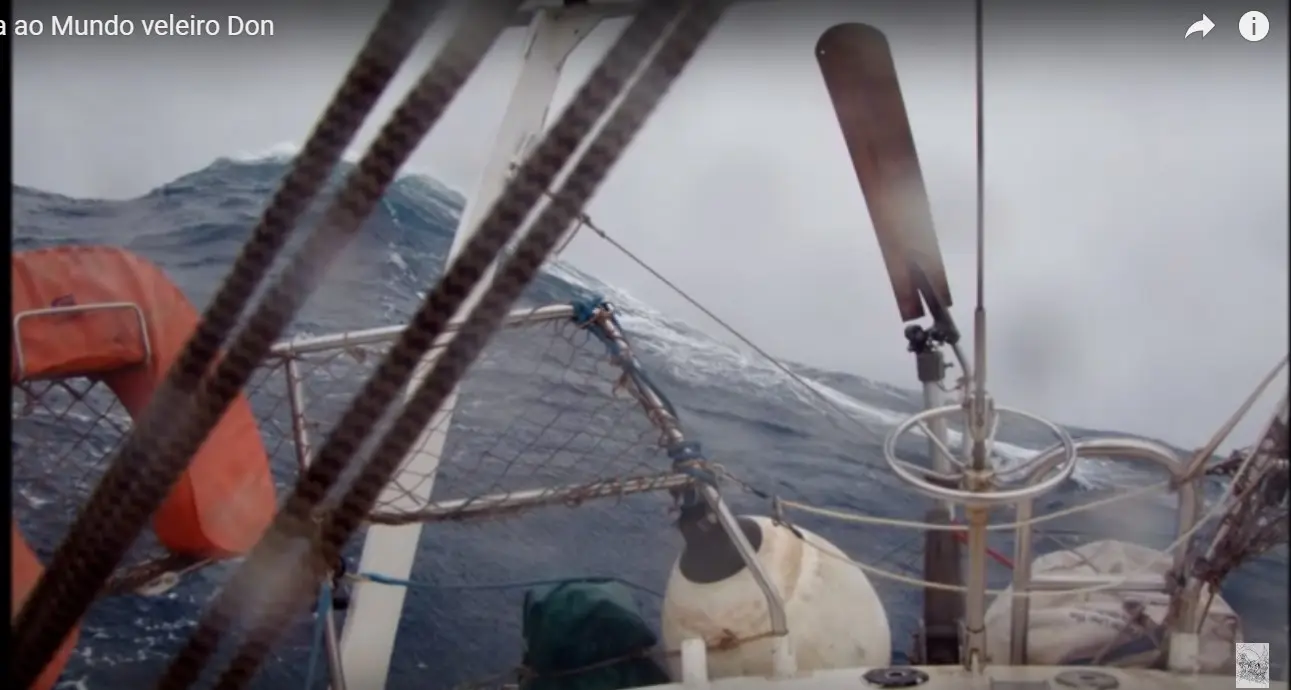
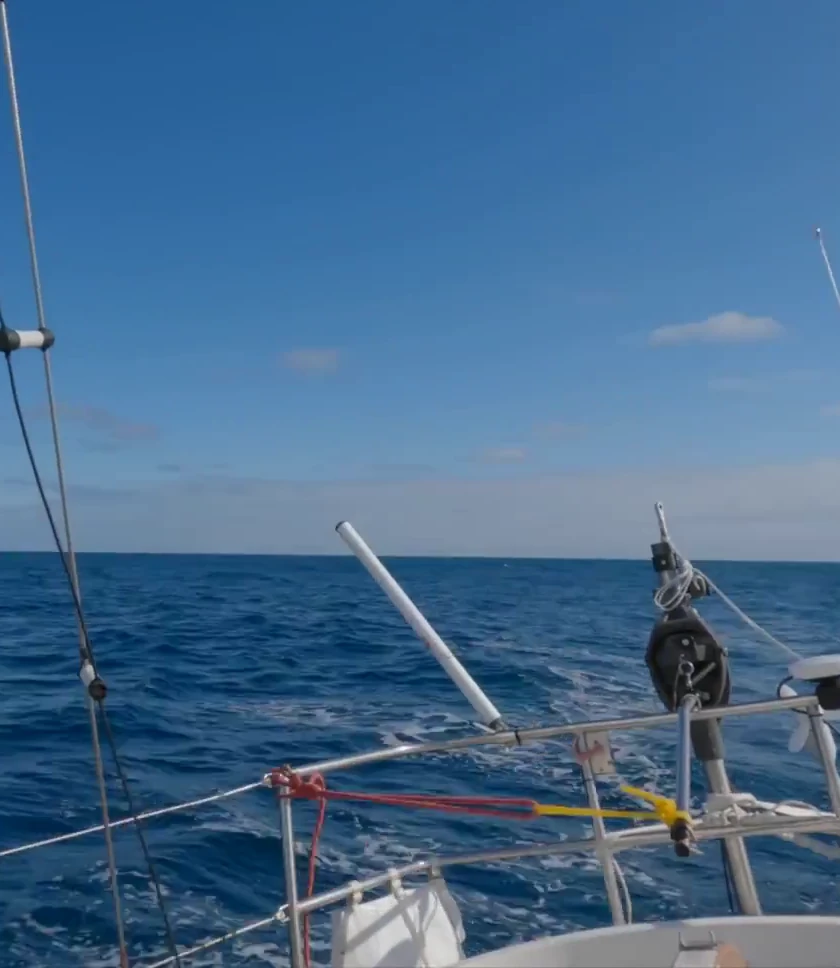
Auxiliary rudder systems, particularly the Hydrovane, use relatively large wind vane surfaces, with areas of up to approximately 0.74 m², to capture light apparent winds and generate sufficient aerodynamic force to operate the steering mechanism. However, this large surface area can also become a significant structural liability in extreme conditions.
During a knockdown, when a boat is knocked onto its side by a large wave and the mast approaches or reaches the surface of the water, the wind vane and its supporting structure may be subjected to exceptionally high loads. The vane can be struck directly by the moving water or become partially submerged. Because the large surface area acts at a considerable distance from the supporting structure, the resulting leverage can generate substantial bending moments and torsional loads, potentially damaging or deforming shafts, bearings, or other internal components.
The Case of Simon Curwen (GGR 2022): On January 27, 2023, near Cape Horn, Curwen's yacht Clara suffered a knockdown. The impact reportedly damaged the Hydrovane wind vane assembly, resulting in the failure of a critical upper component. Without a replacement part for that specific component on board, the self-steering system could not be restored to operation. Curwen was subsequently forced to divert to Chile, bringing his participation in the race to an end and losing his position in the fleet.
Chapter 8: Lessons from the Golden Globe Race (GGR)
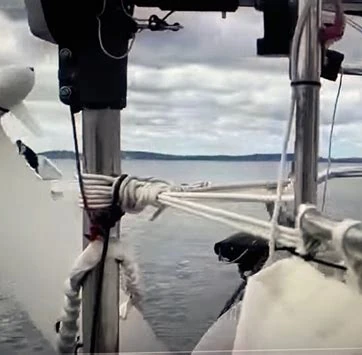
The Golden Globe Race has demonstrated that even well-established self-steering systems can experience failures resulting not only from extreme ocean conditions, but also from installation, adjustment, maintenance, or operational issues.
- Damien's Incident: Just three days after the start, one of the mounting bolts on Damien's Hydrovane failed under load. Subsequent analysis suggested that the bolt may have been over-tightened or not seated correctly against the mounting surface. In an attempt to prevent the bolt from repeatedly loosening or failing, a modification may have inadvertently increased the stresses acting on the assembly and contributed to further damage. The incident also highlighted the importance of the relationship between the diameter and stiffness of the auxiliary rudder shaft and the loads it must withstand. To limit shaft deflection under load, the manufacturer introduced an intermediate bushing as part of the system's support arrangement. Damien subsequently installed an additional support arm and visually marked the Nyloc nuts to make any movement or loosening easier to detect during routine inspections.
- Operator-Related Issues: Don McIntyre has pointed out that many self-steering failures are, in practice, related to the operator rather than to an inherent design defect. In the current edition of the race, several participants reported loose screws or fasteners. Because a self-steering windvane is a continuously moving mechanical system exposed to vibration, shock loads, and repeated cyclic stresses, regular inspection of fasteners and mounting points is essential. Daily checks can identify loose hardware before a minor issue develops into a major mechanical failure.
Chapter 9: Conclusions and Selection Guide

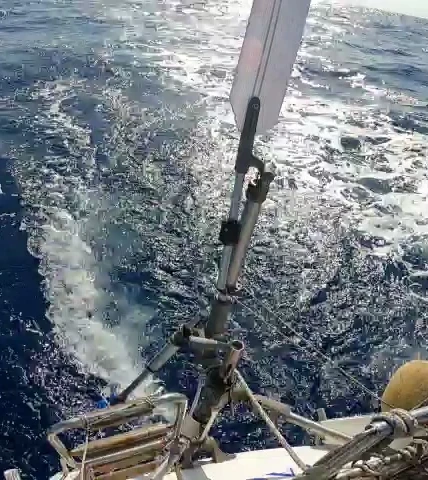
The choice of a self-steering windvane should be based primarily on the type of boat, its steering system, the intended use, and the sailor's priorities. There is no single system that is ideal for every boat or every sailing condition. The most appropriate choice is the one that provides sufficient steering authority while remaining compatible with the boat's structure, balance, and intended use.
- For light boats and small ocean-racing yachts such as the Class 5.80: A lightweight servo-pendulum system such as the South Atlantic S 301 can be a logical choice. Its relatively low weight and compact design make it well suited to lightweight boats where minimizing additional weight and structural loads is particularly important.
-
For light boats such as the Class 5.80 and similar designs:
The use of a large auxiliary-rudder system such as the Hydrovane raises additional questions regarding weight, structural loads, and the consequences of extreme events such as knockdowns. In the case of solo sailor Jasmine Harrison, repairs and reinforcement were reportedly required in the stern area of her 19-foot plywood yacht after structural damage developed. The incident has raised questions about the loads imposed on the transom by an auxiliary-rudder system, although the precise cause and contribution of the system should be evaluated on a case-by-case basis.
On very light boats, the additional weight of a large auxiliary-rudder system can also be significant compared with that of a lightweight servo-pendulum system, potentially affecting the boat's trim, balance, and overall sailing characteristics. Another concern is the behavior of a large windvane and its supporting structure during a severe knockdown, when the vane may be exposed to direct impact from moving water. The long-term structural consequences of these loads, particularly on lightweight boats, are an important consideration when selecting a self-steering system.
Ultimately, these are questions that cannot be answered by marketing claims or opinions alone. Real-world experience, long-term use, and documented performance in demanding conditions are the most reliable ways to determine whether the advantages of a particular system justify its additional weight and potential structural loads.
- For heavier cruising boats, particularly those with center-mounted wheels or hydraulic steering systems: Auxiliary-rudder systems such as the Hydrovane, Windpilot Pacific Plus, and the South Atlantic S 500 or South Atlantic S 600 can provide the additional advantage of an independent steering surface that can also serve as an emergency rudder. This configuration offers valuable redundancy, particularly on long ocean passages where damage to the primary steering system could otherwise leave the vessel without effective directional control.
Regardless of the model selected, a self-steering windvane should not be regarded as merely an accessory. On an ocean-going sailboat, it can be an essential safety and navigation system, reducing fatigue and providing reliable course-keeping over long periods. As one sailor concluded after losing his main rudder in the Atlantic: "Without the self-steering windvane, I wouldn't have a boat today. It's that simple."
Technical Resources & References
- View or Download: Auxiliary Rudder Physics and Performance
- Windvane Self-Steering FAQ & Technical Guide
- Emergency Rudder FAQ & Auxiliary Technical Guide
- Technical Report: How Windvane Self-Steering Systems Work
- Comparative Analysis of Servo-Pendulum and Auxiliary Rudder Systems
- Comparative Table of Windvane Systems
- Install Off Center – Don't Give Up Your Transom!- A rigorous look at the geometry
- Comprehensive Analysis of Self-Steering Systems: Electronic Autopilots vs. Windvane Gears
- Technology, Classification and Performance Analysis in Ocean Navigation
- The Myth of Force: Which System Has More Steering Power?
- Technical document based on technical manuals published by Hydrovane, Windpilot, South Atlantic, Aries, and Monitor, as well as analysis of ocean races, including the Golden Globe Race (GGR), and reference works such as those by John Letcher.