Introduction to Auxiliary Rudder Systems

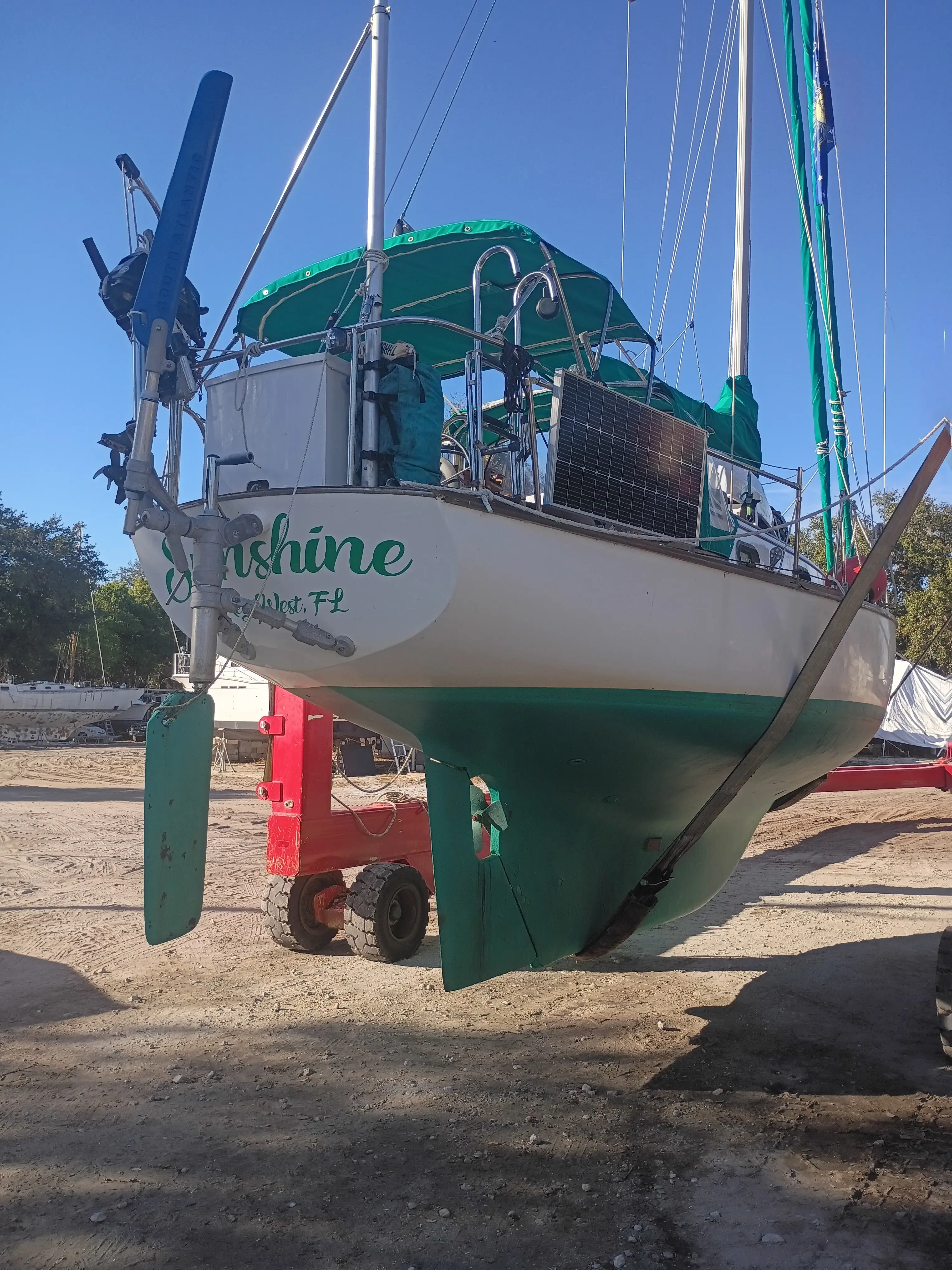
Auxiliary rudder system mounted on a sailboat transom

For bluewater cruisers, the auxiliary rudder windvane represents the pinnacle of self-steering technology. Unlike servo-pendulum systems that rely on the boat's main rudder, auxiliary rudder systems feature a completely independent steering surface. This provides unparalleled reliability and doubles as a vital emergency rudder in the event of main rudder failure.

However, not all auxiliary rudder systems are created equal. This technical analysis compares the engineering principles of leading brands, focusing on mounting geometry, rudder submersion dynamics, and hydrodynamic efficiency.

The Physics of Off-Center Mounting & The 1:3 Rule

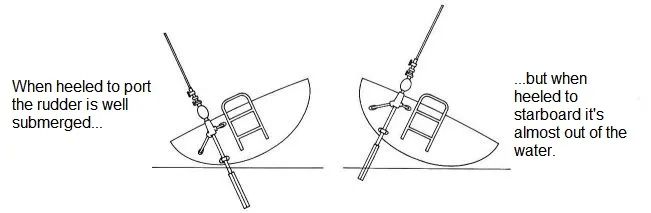
Diagram showing rudder submersion and mounting geometry

The 1:3 Submersion Rule

For an auxiliary rudder to generate sufficient steering torque, it must remain fully submerged even when the boat heels. A fundamental principle of hydrodynamics dictates that the rudder's aspect ratio and mounting depth must compensate for the vessel's angle of heel. The "1:3 rule" suggests that for every degree of expected heel, the rudder must have adequate depth to prevent ventilation (air drawing down the rudder surface, causing a total loss of steering).

Off-Center Mounting Challenges

Some manufacturers advocate for off-center mounting to avoid the propeller shaft or swim platform. However, this introduces significant hydrodynamic asymmetry. When the boat heels to the side of the offset rudder, the effective depth decreases dramatically, leading to ventilation and steering failure in heavy weather. A centerline or near-centerline mounting is critical for consistent performance on both tacks.

The "Clean Water" Myth vs. Reality

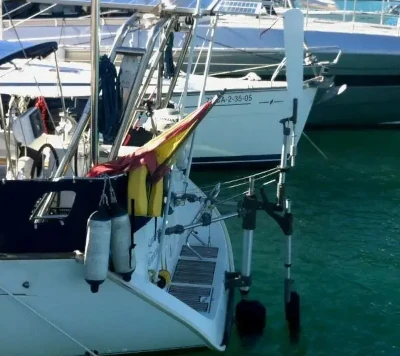
Sailboat stern showing water flow and rudder placement

A common marketing claim is that mounting the windvane far outboard provides "clean water," free from the turbulence of the main rudder and hull. While theoretically appealing, this claim is often misleading in practice.

  • Turbulence Reality: At cruising speeds, the entire stern area experiences complex flow patterns. Moving the rudder further outboard does not necessarily place it in "cleaner" water; it often places it in the turbulent wake of the hull's broadest beam or the propeller aperture.
  • Leverage vs. Flow: Extending the rudder too far outboard increases the leverage on the mounting brackets, requiring heavier, more complex construction to prevent flexing. Flex in the mounting system absorbs the windvane's corrective impulses, resulting in sluggish steering response.
  • The South Atlantic Solution: Our systems are engineered to mount as close to the centerline as the boat's architecture allows, optimizing the balance between adequate submersion, structural rigidity, and exposure to consistent water flow.

Comparative Analysis: South Atlantic vs. Competitors

Feature South Atlantic Typical Competitors
Mounting Geometry Optimized for centerline/near-centerline placement Often pushed far outboard, risking asymmetry
Rudder Submersion Deep aspect ratio designed for the 1:3 heel rule Shallow rudders prone to ventilation on a heel
Structural Rigidity Heavy-duty, minimal-flex transom brackets Extended arms that can flex under heavy load
Emergency Capability True "Ready-To-Go" independent emergency rudder May require complex deployment procedures

Conclusion

When selecting an auxiliary rudder windvane, sailors must look beyond marketing buzzwords like "clean water." The physics of rudder submersion, mounting symmetry, and structural rigidity are the true determinants of offshore reliability. South Atlantic's engineering prioritizes these fundamental hydrodynamic principles, ensuring that your self-steering system performs flawlessly when you need it most.

If you require any further information or a custom assessment for your vessel, please Contact Us.

Technical Resources & Guides

Explore our complete technical library covering installation, system architecture, and offshore safety.

Contact Details

Phone: +54 911 2158 2504
E-mail:
Website: www.south-atlantic.net

South Atlantic
Santiago del Estero 2175
CABA
Argentina

Design & Management

South Atlantic
Weko Park, Werther 33824
NRW, Germany

E-mail:

Newsletter Subscription

Subscribe to our newsletter to receive
the latest news and updates