36. Can South Atlantic windvanes be customized to fit specific boat requirements?
Yes, all models can be customized.
37. Is it possible to install the gear yourself, or is professional help required?
All units are designed to be easily owner-installed.
38. What materials are used for the fixed mast steps?
They are made of aluminium.
39. How many models are included in the current South Atlantic product range?
The product range consists of 7 models.
40. Does South Atlantic provide a "crush course" for learning how the system works?
Yes, they offer a crush course for more details on system operation.
41. Is the S 600 model considered a dual-purpose system?
Yes, the S 600 is both a self-steering gear and an emergency rudder.
42. Can all, or only some, self steering devices be mounted off-centre?
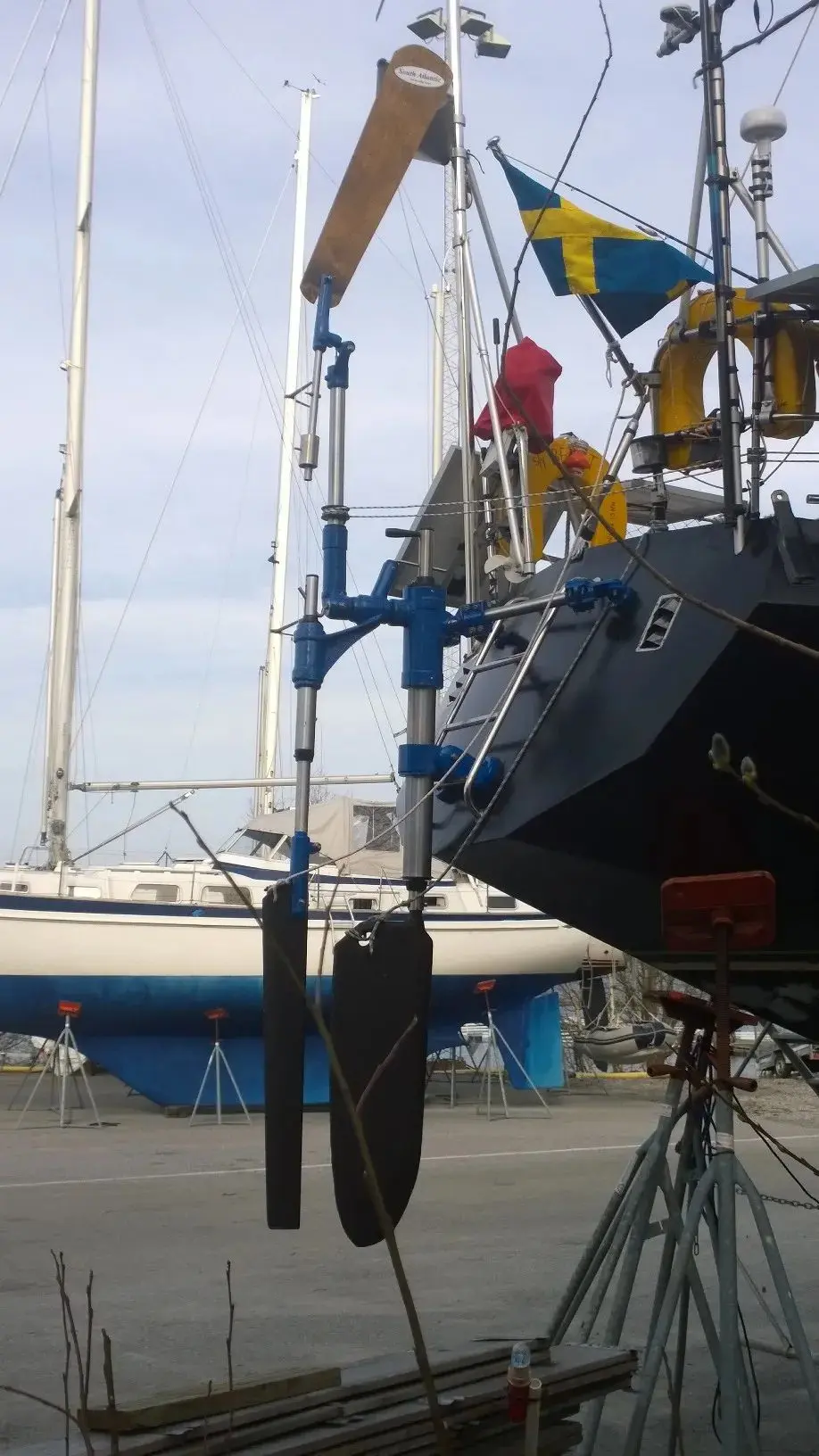
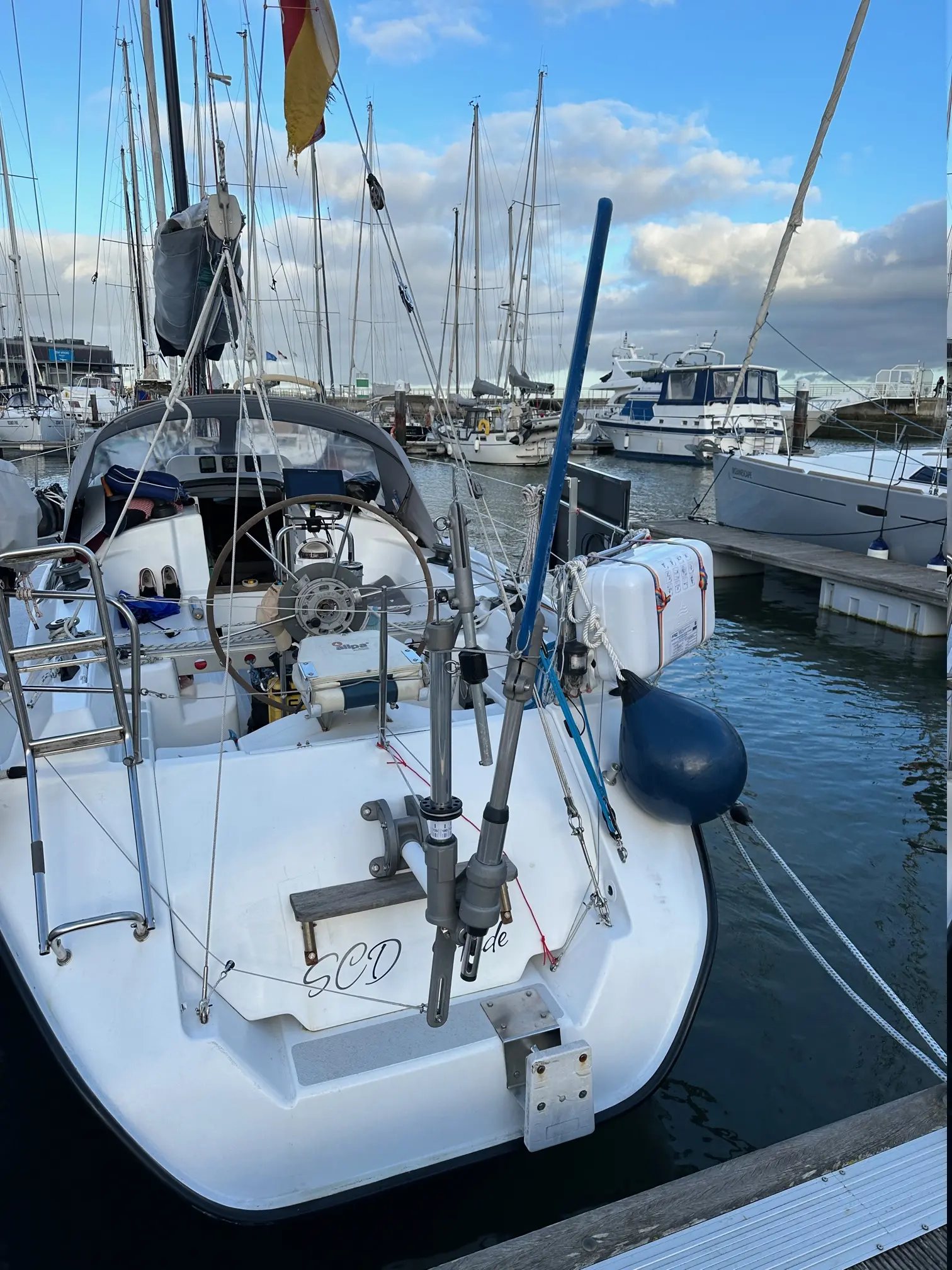
Self-steering devices can be mounted off-center, but doing so introduces geometric asymmetry that can affect their performance depending on the vessel's heel angle and tack.
43. What happens when a self-steering device is mounted off the vessel's centerline?
When mounted off-centre, a geometric asymmetry is introduced that changes the system's behavior depending on the tack and the vessel's angle of heel. This affects the hydrodynamic flow around the submerged appendages.
44. How does heeling affect an off-centre mounted device?
When the vessel heels away from the side where the device is mounted, the quarter where the device is located rises relative to the local dynamic waterline. This reduces the effective immersion of the blade and brings its lower tip closer to the surface.
45. What is ventilation and why is it a problem?
Ventilation occurs when atmospheric air is drawn down into the low-pressure region around the submerged appendage. This reduces lift and steering effectiveness. Off-centre mounting increases the risk of ventilation, especially when heeling away from the mounted side.
46. How does flow asymmetry affect off-centre installations?
Unlike centerline-mounted devices where flow is generally symmetrical, off-centre installations place the blade in a different hydrodynamic environment. The flow is influenced by the hull's boundary layer, local turbulence, wake structure, and vortices, producing different steering characteristics on port and starboard tacks.
47. What structural effects does off-centre mounting create?
Off-centre mounting introduces an additional transverse lever arm. The hydrodynamic forces generate not only steering torque but also additional loads and moments on the mounting structure. Any elastic deformation or bending of brackets can cause slower steering response, reduced precision, or increased deadband.
48. Are these differences caused by the brand or type of windvane?
No, these are not theoretical differences created by the brand or type of windvane. They are consequences of the geometry of placing a submerged steering surface away from the vessel's centerline.
49. What factors make the geometric effects more significant?
The geometric effects become more significant the further the blade is moved from the centerline and the greater the vessel's heel angle.
50. Since what year has South Atlantic been manufacturing these gears?
We have been manufacturing worldwide since 1987.
51. Are the systems sold directly from the factory?
Yes, we offer worldwide sales factory direct.