
Windvane Self-Steering Systems in the 2025–2026 McIntyre Mini Globe Race — A Comparative Review of Hydrovane, Windpilot and South Atlantic Systems
1. Introduction
The 2025–2026 McIntyre Mini Globe Race provided a demanding real-world environment for evaluating windvane self-steering systems. The competitors sailed solo aboard 19-foot Class Globe 5.80 yachts over a long-distance route involving varied wind conditions, confused seas, extended downwind passages and the accumulated stresses of an oceanic circumnavigation.
In this setting, a windvane is more than a convenience. It reduces the physical demands of continuous manual steering, helps preserve the skipper's energy and can contribute to safety when the sailor must attend to other tasks. At the same time, the race exposed the difficulty of achieving consistent self-steering on small, light and highly responsive hulls.
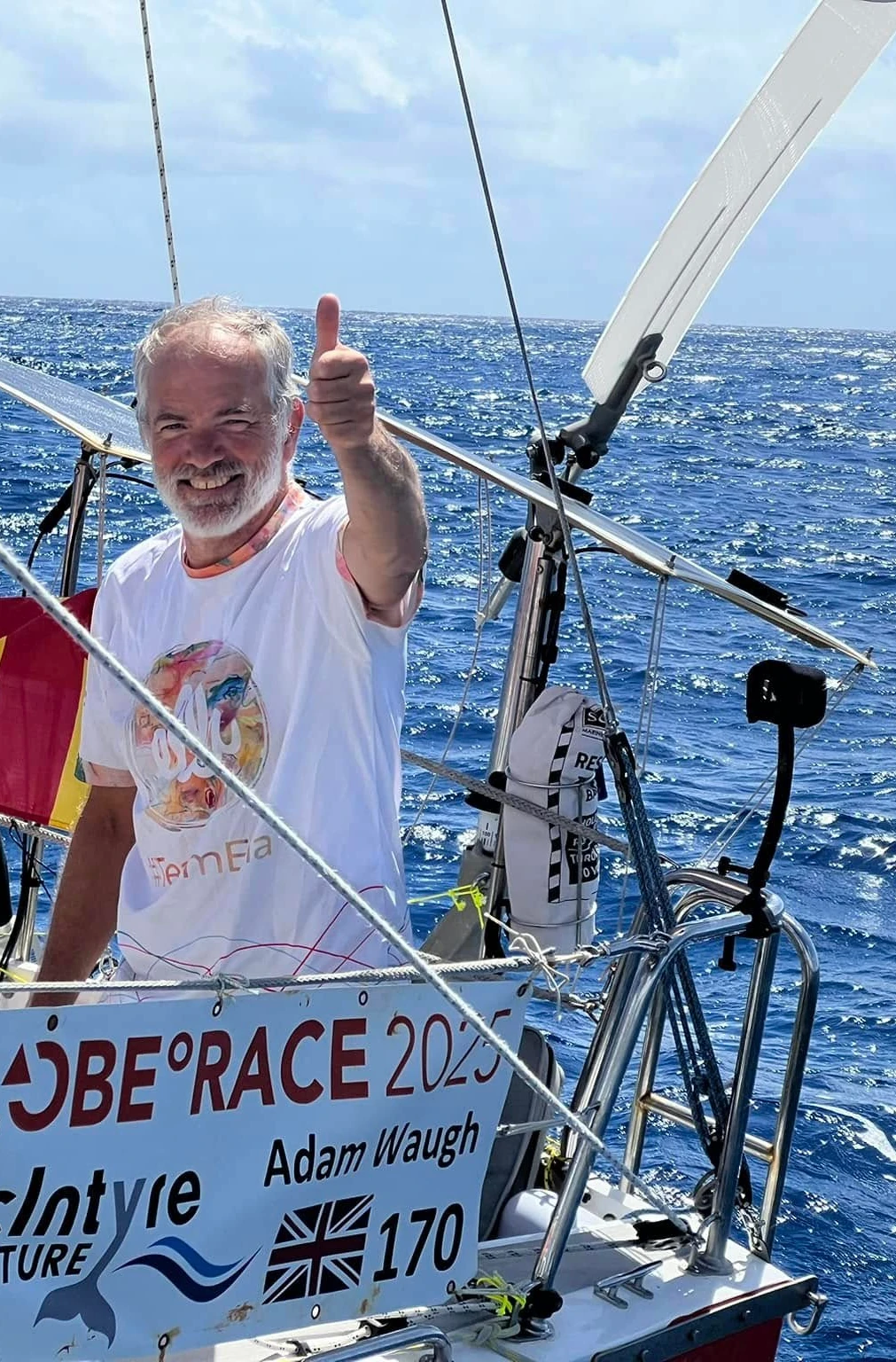
This report reviews the experiences documented for three systems represented in the fleet: Hydrovane, Windpilot and South Atlantic. It focuses on reported performance, equipment damage, installation and configuration issues, environmental interference, and maintenance requirements.
The observations are drawn from race updates, skipper accounts, interviews and other material referenced throughout the report. They should be interpreted as field observations rather than the results of a controlled technical trial. The yachts differed in setup, loading, sail inventory, installation geometry and skipper technique. Consequently, the incidents described here cannot, by themselves, establish the overall reliability or superiority of one manufacturer's system.
The central distinction throughout this review is between:
- Mechanical or structural failure: damage or malfunction within the windvane unit itself.
- Installation-related problems: binding, misalignment, mounting issues or interference caused by the way the system is fitted.
- Control-circuit issues: friction, slack, stretch or inefficient routing in the lines and blocks connecting the servo-pendulum to the yacht's steering.
- Performance and configuration challenges: conditions in which the system remains operational but cannot maintain satisfactory course-keeping without adjustments to sail trim, balance or steering settings.
- Environmental interference: seaweed, turbulence, wave action and other external factors that affect the system's ability to sense wind or generate steering force.
These categories matter because a windvane is not an isolated component. Its performance depends on the interaction between the mechanism, the boat's hull and rudder, the installation, the steering circuit, the sails and the surrounding conditions.
2. Hydrovane
Hydrovane systems use an independent auxiliary rudder. Unlike servo-pendulum systems, which transmit steering force through lines to the yacht's main rudder or tiller, an auxiliary-rudder system steers through its own rudder blade. This arrangement offers a different installation and control architecture, but it also places substantial structural and hydrodynamic demands on the transom and auxiliary rudder assembly.
Several Hydrovane-equipped competitors encountered problems during the race. The reported cases ranged from mechanical damage and installation binding to over-correction, steering sensitivity and limitations under particular sail configurations.
2.1 Ertan Beskardes — Trekka
Ertan Beskardes experienced a significant mechanical failure when a critical link or component in his Hydrovane mechanism was lost during the race. With no suitable spare available, the system could no longer be relied upon for normal self-steering.

Before the failure, Beskardes had used different sail configurations to manage the balance between speed and steering performance. He reported using a large A5 spinnaker and assisting with or taking over steering during the day, while preferring a jib-only configuration at night to maintain a more manageable course and obtain rest.
Following the failure, he had to rely on small electric autopilots in easier conditions and manual steering when the conditions exceeded their practical capability. The incident illustrates the consequences of losing a critical mechanical component on a solo passage, particularly when replacement parts are unavailable.
Technical significance
This was a reported mechanical failure rather than simply a matter of sail trim or installation. It also demonstrates the importance of inspecting vulnerable connections and considering the availability of appropriate spares for long-distance solo sailing.
Sources: Sail-World race coverage; McIntyre Mini Globe Race.
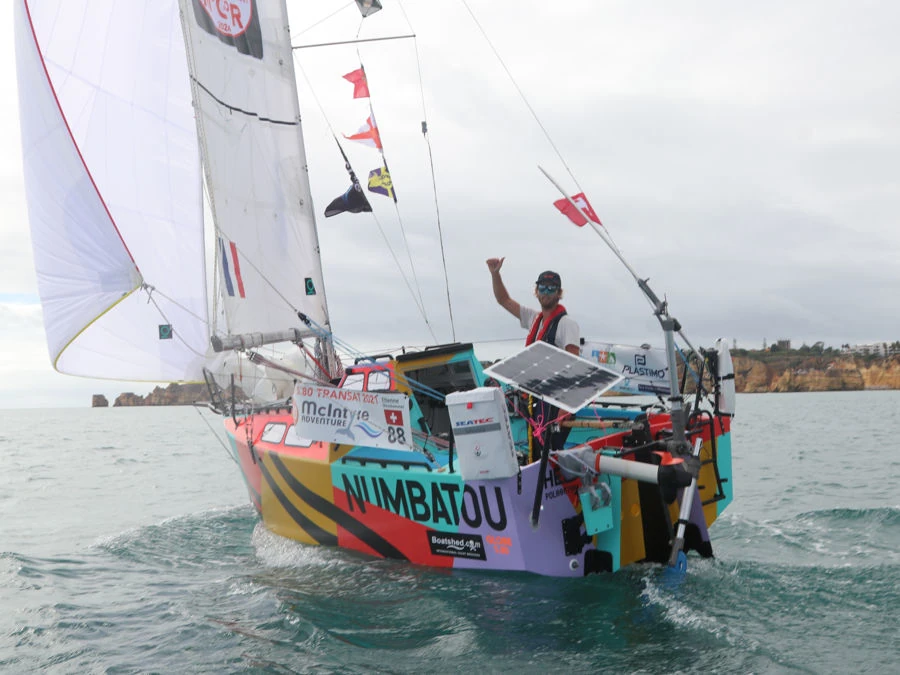
2.2 Jasmine Harrison — Numbatou
Jasmine Harrison encountered both installation-related difficulties and a later structural problem with her Hydrovane.
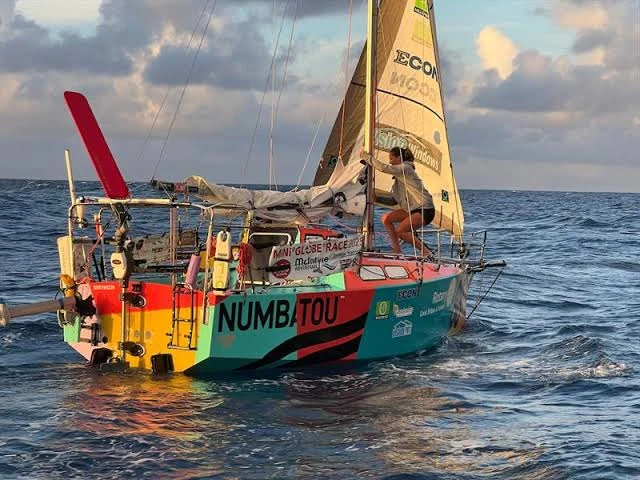
During the race, an installation modification resulted in excessive pressure at the lower mounting points. This caused the auxiliary rudder system to bind and prevented it from moving freely. Harrison had to investigate and correct the problem while at sea. After loosening the affected bolts and changing the way the main rudder was allowed to move, she was able to restore the system's operation.
The incident highlights how mounting geometry and bolt tension can affect the free movement of an auxiliary rudder assembly. It also shows that instructions or standard practices may need to be applied carefully to the specific geometry of a small yacht.
Harrison also reported difficulty maintaining a stable course in larger, rolling seas. The highly responsive nature of the Class Globe 5.80 hull could lead to excessive steering corrections, producing pronounced course deviations and reducing boat speed. The resulting workload contributed to fatigue and periods of manual steering.
Later in the race, Harrison experienced a structural failure when part of the Hydrovane steering frame reportedly broke. She carried out a temporary repair using available materials to keep the system functional.
Despite these setbacks, Harrison successfully completed her circumnavigation and received the Chichester Trophy. Her experience illustrates both the demands placed on equipment in the race and the importance of diagnosis, adaptation and repair skills at sea.
Technical significance
Harrison's case contains distinct types of problems that should not be conflated. The initial binding was related to installation and adjustment, while the later frame damage was a structural incident. The over-correction she experienced was a performance challenge associated with the interaction between the system and the boat's motion.
Sources: Live Sail Die; Sail-World; McIntyre Mini Globe Race timeline; Harrison's account.
2.3 Dan Turner — Immortal Game
Dan Turner's experience demonstrated the effect of sail forces, hull balance and installation clearance on an auxiliary-rudder system.
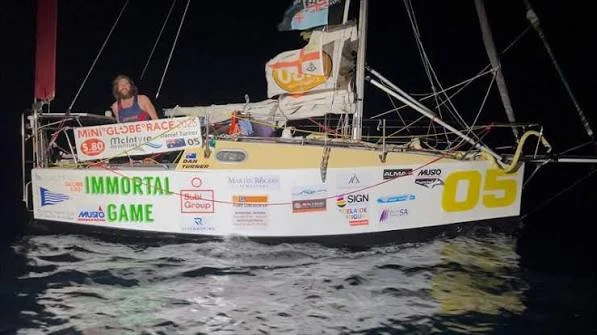
Turner reported that the Hydrovane struggled to maintain course under certain sail configurations. In particular, the steering system had difficulty managing the rotational forces generated by the mainsail when the hull did not provide sufficient lateral resistance. Under some conditions, the yacht could be steered more reliably under the jib alone.
This limitation required Turner to reduce sail or change configuration, at times accepting a reduction in average speed. He also had to intervene manually when the windvane could not maintain the desired course.
Turner had reinforced the stern structure of Immortal Game during the boat's construction. This was a precaution intended to distribute the loads associated with mounting an independent auxiliary rudder on a small plywood transom.
Later, a knockdown reportedly affected the alignment of the system, and Turner experienced further operational difficulty. The positioning of onboard solar panels also created clearance and airflow considerations for the windvane's air paddle, particularly when sailing downwind.
Technical significance
Turner's case demonstrates that an auxiliary-rudder system must be considered as part of the yacht's overall steering and balance arrangement. Transom strength, mounting alignment, sail balance and unobstructed movement of the air paddle all contribute to satisfactory operation.
Sources: McIntyre Mini Globe Race — Transat summary; Turner's boat build; McIntyre Mini Globe Race.
2.4 Renaud Stitelmann — Capucinette
Renaud Stitelmann, the race winner, also reported challenges with the Hydrovane in difficult sea states.
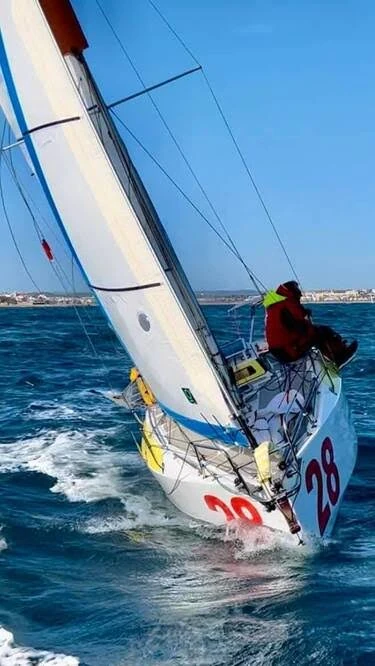
In heavy and confused conditions, the system could over-correct in response to the movements of the highly responsive hull. This led to zigzagging and reduced boat speed. Stitelmann experimented with a shock-cord arrangement to dampen or limit the rudder's movement and reduce excessive steering response.
In particularly confused seas, with waves arriving from multiple directions, the system's ability to maintain course was reportedly reduced. Stitelmann sometimes had to modify his sail plan or resort to manual steering.
Technical significance
The experience of the race winner is important because it shows that steering challenges were not confined to less experienced sailors or to a single installation. However, the reported difficulty should be understood in the context of the small hull's motion, sea state, sail balance and steering settings, rather than as proof of a general limitation affecting all Hydrovane installations.
Sources: Practical Boat Owner; McIntyre Mini Globe Race; Race video.
2.5 Pilar Pasanau — Peter Punk
Pilar Pasanau also experienced course-keeping and over-steering challenges similar to those described by other Hydrovane users. The available accounts indicate difficulties with tracking and steering response, but do not establish a comparable structural break or mechanical jam in her system.
Technical significance
Her experience reinforces the importance of hull balance, sail configuration and steering response in small, light-displacement yachts. Performance difficulties should not automatically be classified as mechanical failures.
Source: Race video.
2.6 General assessment of Hydrovane
The Hydrovane incidents described in the source material cover several different categories:
- Mechanical component loss, as reported by Ertan Beskardes.
- Installation-related binding and structural damage, as experienced by Jasmine Harrison.
- Steering and sail-force limitations, as reported by Dan Turner.
- Over-correction and course-keeping difficulties in heavy or confused seas, as reported by Renaud Stitelmann and Pilar Pasanau.
- Clearance and alignment considerations involving onboard equipment and the mounting arrangement.
These cases show that the demands of the Class Globe 5.80 can expose vulnerabilities in the complete installation and operating setup. They also show that some problems were corrected through adjustment or adaptation, while others involved physical damage.
The reports do not provide a standardized failure rate, nor do they establish the condition of every Hydrovane used in the fleet. A reliable comparison would require consistent information about total units, operating hours, maintenance history, installation geometry and the severity of conditions encountered.
3. Windpilot
Windpilot servo-pendulum systems use a wind-sensing air vane to control an underwater servo-pendulum blade. Water flow acting on the blade generates the force transmitted through control lines to the yacht's main steering system.
This arrangement relies on several elements working together: the air vane must receive clean airflow, the underwater paddle must operate in suitable water flow, and the control lines must transmit movement efficiently. The race accounts for Windpilot users primarily describe environmental interference, installation or layout conflicts and operational challenges rather than catastrophic structural failures of the main unit.
Two competitors in the fleet were reported to have used Windpilot systems: Jakub Ziemkiewicz and Christian Sauer.
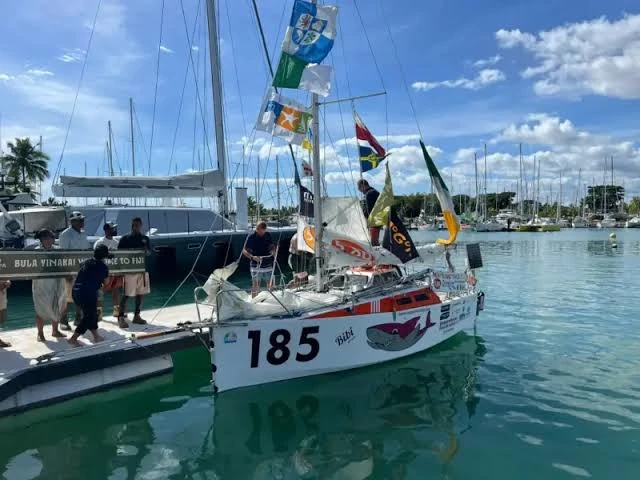
3.1 Jakub Ziemkiewicz — BIBI
Jakub Ziemkiewicz's experience aboard BIBI highlights the effects of environmental fouling and the sailing characteristics of the Class Globe 5.80.
Seaweed fouling
During Atlantic passages, Ziemkiewicz encountered floating sargassum. Seaweed accumulated around the underwater servo-pendulum blade, interfering with the water flow needed to generate steering force. He had to clear the fouling manually on repeated occasions to restore operation.
This is an environmental obstruction rather than evidence of a broken internal mechanism. However, it can still disable effective steering and require a potentially hazardous intervention at the stern.
Light-air performance
Ziemkiewicz also reported frustration in very light winds. A servo-pendulum system depends on sufficient relative water flow across its underwater blade to produce useful steering force. When boat speed falls, the available hydrodynamic force also decreases, limiting the system's ability to correct the yacht's course.
Downwind tracking and hull balance
Ziemkiewicz had difficulty maintaining stable downwind tracking in heavy, rolling seas. His limited sail inventory constrained his ability to balance the boat precisely for every condition. When the yacht became unbalanced, it could slide or yaw significantly as it descended waves.
He used the boat's daggerboard configuration to improve directional stability. Lowering the daggerboards helped reduce lateral slipping and provided a more stable platform for the self-steering system. One daggerboard housing reportedly suffered damage under heavy loads, but the available account does not establish that this damage was caused by the Windpilot itself.
Despite these challenges, Ziemkiewicz completed the race and achieved a sixth-place overall finish.
Technical significance
Ziemkiewicz's case illustrates how environmental fouling, low boat speed, sail balance and hull dynamics can limit a servo-pendulum system without necessarily indicating a mechanical defect in the windvane unit.
Sources: Afloat; Southern Wooden Boat Sailing; McIntyre Mini Globe Race — Leg 2; McIntyre Mini Globe Race.
3.2 Christian Sauer — Argo
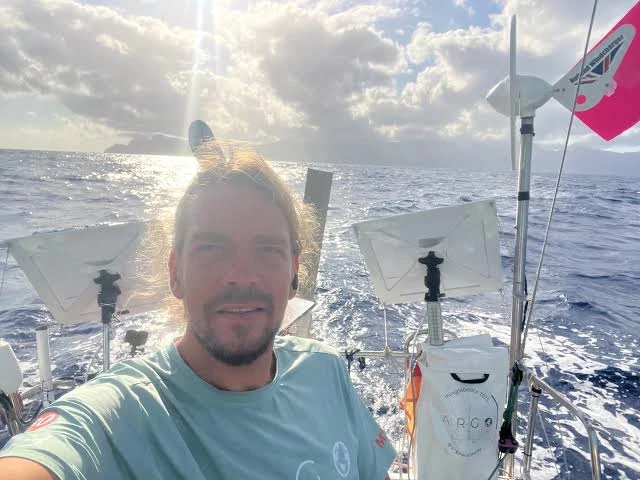
Christian Sauer's experience aboard Argo involved airflow obstruction, underwater turbulence and mounting alignment.
Airflow obstruction
During the early part of the race, Sauer found that the position of his solar panels interfered with the airflow reaching the Windpilot's air vane. Turbulence and obstruction can reduce the vane's ability to sense changes in apparent wind direction accurately, affecting the system's response. Sauer considered changes to the solar panel arrangement to improve airflow.
Underwater turbulence
Sauer also reported difficulties associated with the wake and turbulence created by the yacht's transom-mounted daggerboards. The Windpilot's underwater servo-pendulum blade was positioned in water affected by the hull and appendages. This disturbed flow could reduce the effectiveness and consistency of the hydrodynamic force acting on the blade.
The boat's balance and the relationship between the appendages and the windvane therefore required careful attention.
Mounting clamp alignment
Later in the Pacific, the mounting clamp reportedly slipped out of alignment under the repeated impacts and loads of ocean sailing. This affected the system's operation and added to the skipper's workload. Sauer also faced an electrical system problem, which contributed to periods of manual steering.
Sauer described the difficulty of achieving a smooth course, noting that neither the windvane nor the electric autopilot could consistently manage the boat in the conditions he encountered. Even manual steering was demanding.
Technical significance
Sauer's case demonstrates how airflow, underwater flow, mounting security and overall yacht balance can combine to influence self-steering performance. It also underlines the need to distinguish the performance of the windvane mechanism from external layout and mounting conditions.
Sources: McIntyre Mini Globe Race — Leg One report; Sail-World; Practical Boat Owner.
3.3 General assessment of Windpilot
The Windpilot cases documented in the source material mainly concern:
- Seaweed fouling of the underwater servo-pendulum blade.
- Reduced hydrodynamic effectiveness at very low boat speeds.
- Airflow obstruction caused by onboard equipment.
- Turbulence from hull appendages and transom geometry.
- Mounting clamp slippage and alignment.
- The need to balance the yacht and optimize sail configuration.
The reported cases do not describe a catastrophic structural failure of the Windpilot's principal mechanism. That observation should not be interpreted as proof that the system is immune to mechanical failure; it simply reflects the incidents documented for the two Windpilot-equipped boats in the available material.
The experiences emphasize the importance of a clear airflow path, suitable underwater placement, secure mounting and efficient integration with the boat's steering system.
4. South Atlantic
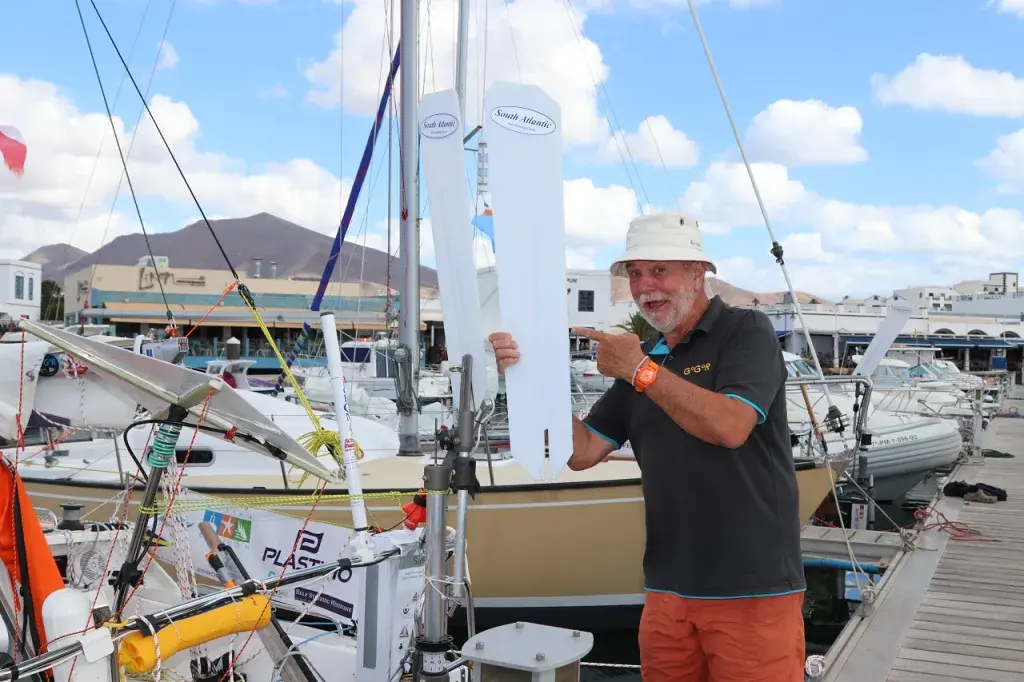
South Atlantic servo-pendulum systems were used by several competitors in the Class Globe 5.80 fleet. The reported experiences provide useful insight into the importance of control-line routing, tension, friction, sail balance and the relationship between a responsive hull and the windvane's steering characteristics.
The available accounts describe steering sensitivity, wear in the control-line circuit and the need for ongoing adjustments. These issues should be assessed carefully and distinguished from failures of the windvane's principal mechanical structure. A servo-pendulum system depends on the complete transmission circuit between the underwater blade and the yacht's steering, so the condition and geometry of the lines and blocks are integral to its operation.
4.1 Adam Waugh — Little Wren
Adam Waugh's experience focused on fine-tuning the relationship between sail trim, weight distribution and windvane response.
Early in the race, Little Wren was described as a highly responsive or "flighty" yacht. In certain conditions, the servo-pendulum could react strongly when the sails were not adequately balanced. Gusts and changing sea states could increase the steering demands placed on the system, making it more difficult to maintain a stable course.

Waugh worked on improving the boat's balance, including adjusting the distribution of equipment and experimenting with different air-paddle sizes. These adjustments helped him achieve more consistent tracking in varying conditions.
Waugh ultimately spoke positively about the reliability of his South Atlantic system. He reported satisfactory performance across different sailing configurations, including wing-and-wing sailing with twin poled-out jibs downwind. He regarded the system as a valuable part of his ability to complete the race.
Technical significance
Waugh's experience demonstrates that steering sensitivity does not necessarily indicate a mechanical failure. On a small, responsive hull, sail trim, loading and the choice of air paddle can materially affect the behavior of the complete self-steering system.
Sources: Globe 5.80 Transat — Leg One summary; Globe 5.80 Transat — Leg Two; BBC.
4.2 Eric Marsh — Sunbear
Eric Marsh's Sunbear used a previously raced South Atlantic S 301. The unit had already seen service in earlier races and was therefore an earlier version of the system, rather than a new, unused model. Given this prior use, it is reasonable to assume that some components may have experienced a degree of wear by the time it was used in the McIntyre Mini Globe Race. This prior service history is an important consideration when assessing the maintenance issues reported during the event.
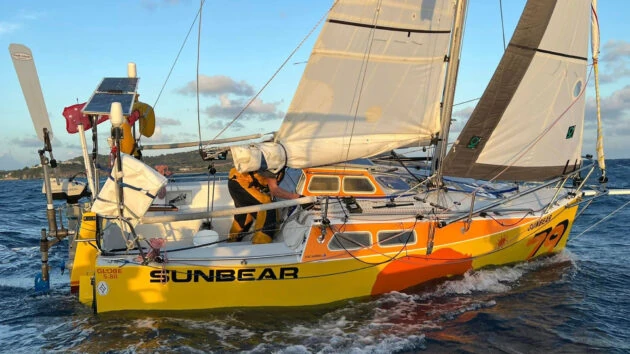
During the race, Marsh encountered wear in the control lines, which required attention and eventual replacement or upgrading in Fiji. These issues highlight the importance of inspecting and maintaining the control-line circuit, particularly on equipment with a history of previous use. However, the reported line wear should not be interpreted as evidence of a failure of the S 301's principal steering mechanism.
Marsh's experience also underlines the importance of regular inspection and maintenance of windvane systems, especially during a demanding offshore race. In an interview before the race, Marsh emphasized that windvanes need to be looked after and that he planned to carry spare parts for components that might require replacement. His comments reinforce the distinction between the reliability of a system's design and the condition of a particular unit after repeated use.
The experience of Sunbear illustrates why the unit's previous service history should be considered when evaluating its performance. The maintenance requirements observed during the race are consistent with the possibility of wear in a previously used system and should not, on their own, be taken as evidence of a fundamental design weakness in the South Atlantic S 301.
Sources: Practical Boat Owner; Coffs Coast News of the Area; McIntyre Mini Globe Race; Sail-World video.
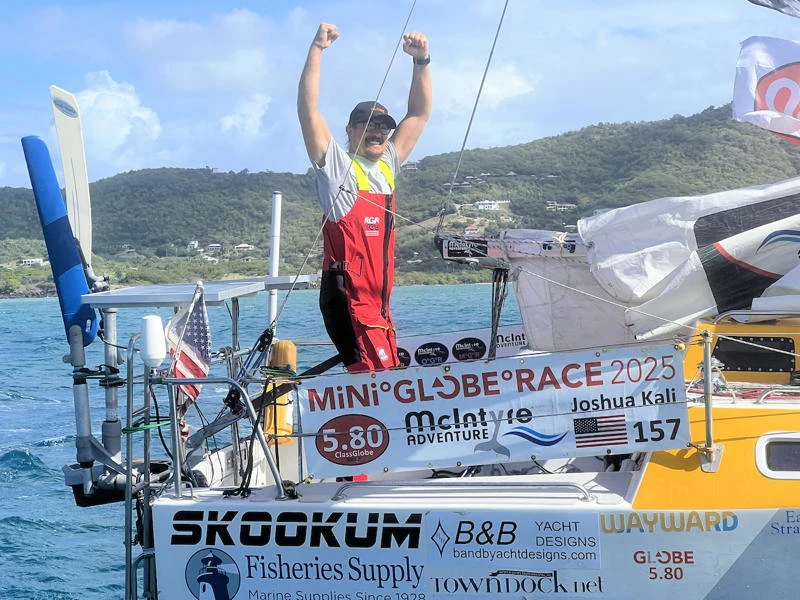
4.3 Josh Kali — Skookum
Josh Kali departed Panama aboard Skookum without an electronic autopilot and carried no electronic autopilot during the race. He therefore relied exclusively on his South Atlantic S 301 windvane as his self-steering system throughout the circumnavigation. This made the S 301 his sole means of automatic course-keeping, placing particular importance on its reliability and on maintaining an effective steering setup during the long ocean passages.
Kali's experience involved ongoing attention to control-line tension and routing. A servo-pendulum system relies on the effective transmission of movement from the underwater paddle to the yacht's steering. If the control lines become slack, stretch or encounter excessive friction, some of the paddle's movement may not be transmitted effectively. This can create a dead zone in which the windvane moves but the yacht's rudder does not respond promptly, resulting in inconsistent course-keeping.
Kali reported the need to maintain suitable line tension and adjust the control-line arrangement. He experimented with custom lead blocks and modifications to the line setup to improve tracking during the Pacific and Indian Ocean legs.
Despite these challenges, Kali continued to depend solely on his S 301, without the backup of an electronic autopilot. His experience highlights the role of correct installation, control-line maintenance and ongoing adjustment in achieving reliable self-steering on a small, highly responsive offshore yacht.
Technical significance
Kali's case illustrates the importance of the complete control circuit in a servo-pendulum system, particularly when it is the vessel's only self-steering equipment. Slack, friction and inefficient line leads can reduce steering precision, but these symptoms do not in themselves demonstrate a failure of the windvane's principal mechanism. His reliance on the S 301 alone throughout the race also provides relevant operational context when assessing the system's role in solo ocean sailing.
Sources: Josh Kali — Latitude 38; Josh Kali's race updates.
4.4 Control-line routing, friction and stretch
The South Atlantic cases raise a broader engineering consideration that applies to servo-pendulum systems generally: the control-line circuit is part of the steering system, not a secondary accessory.
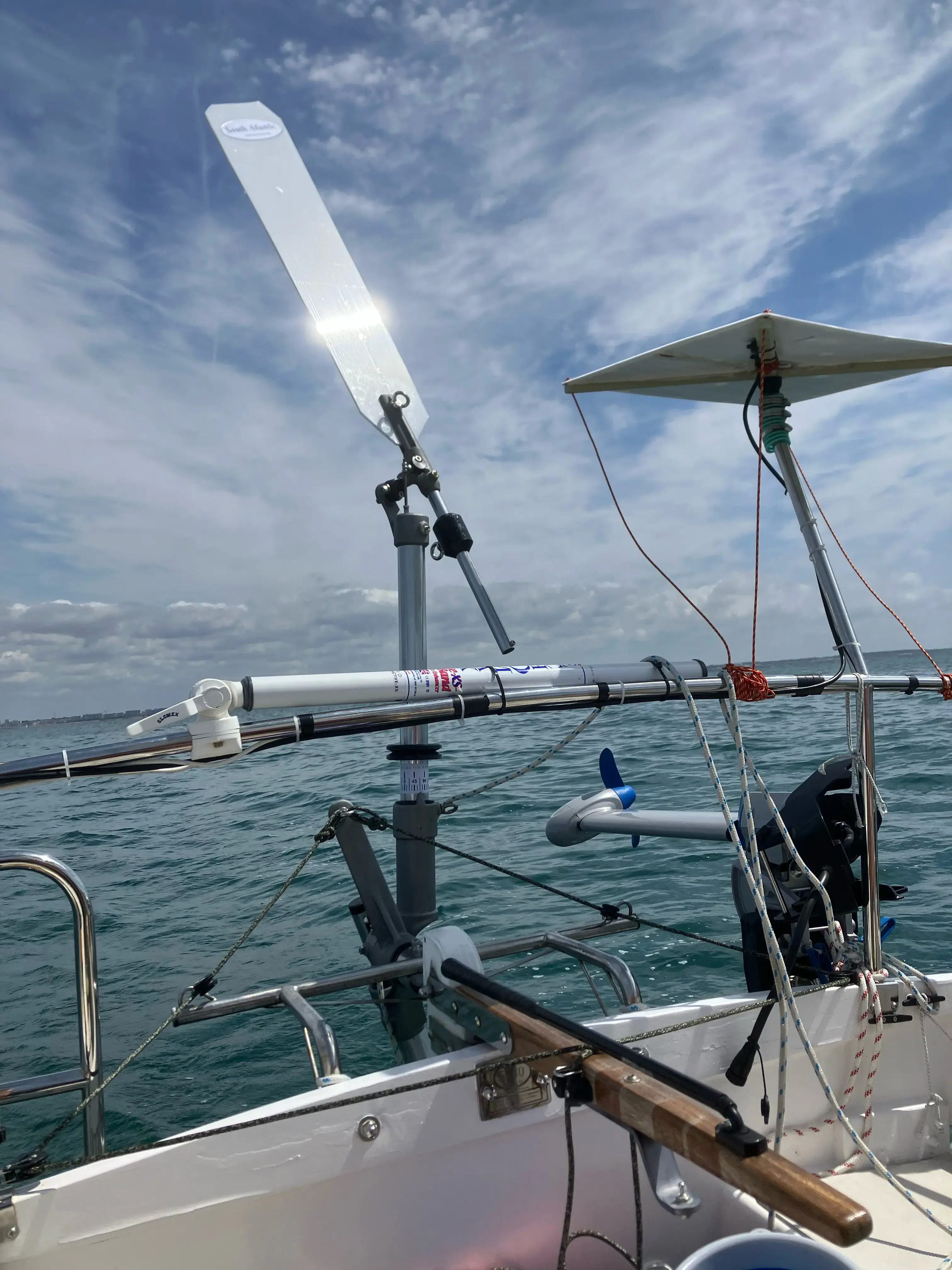
A well-arranged circuit should transmit movement efficiently and consistently. Several factors can affect this:
Line routing and block geometry
Every change of direction through a block introduces some friction. The number of blocks, their alignment, their bearing characteristics and the angles at which lines enter and leave them can all affect transmission efficiency.
On a compact yacht such as a Class Globe 5.80, the distance between the transom and the tiller is short. This can make it particularly important to avoid unnecessary turns, tight angles or poorly aligned blocks.
Line stretch and elasticity
Control lines are exposed to changing loads, particularly when the yacht is moving through waves. If a line stretches significantly under load, some of the servo-pendulum's movement may be absorbed by the line rather than transmitted to the tiller. This can contribute to delayed response or a perceived dead zone.
Low-stretch cordage, appropriate sizing and regular inspection can help maintain consistent transmission. High-performance materials such as Dyneema may be suitable, provided they are selected and installed correctly for the application.
Tension and adjustment
Excessive slack can reduce steering precision, while excessive tension can increase friction or place unnecessary loads on the system. The objective is a correctly adjusted circuit that moves freely while transmitting the steering input reliably.
Maintenance and inspection
Lines, blocks, attachment points and tiller connections should be checked periodically for wear, chafe, alignment and changes in tension. A control circuit that works well in one configuration may require adjustment after changes in sail plan, loading or onboard layout.
These are general engineering considerations for servo-pendulum steering systems. They help explain how control-line issues can affect performance, but they should not be used to attribute a specific failure to a particular material, block or installation unless that cause has been confirmed in the individual case.
References: South Atlantic — S 301 / Globe 5.80; South Atlantic technical information; Dyneema sailing applications; Practical Boat Owner — Windvane guide.
4.5 General assessment of South Atlantic
The South Atlantic cases in the available source material primarily identify:
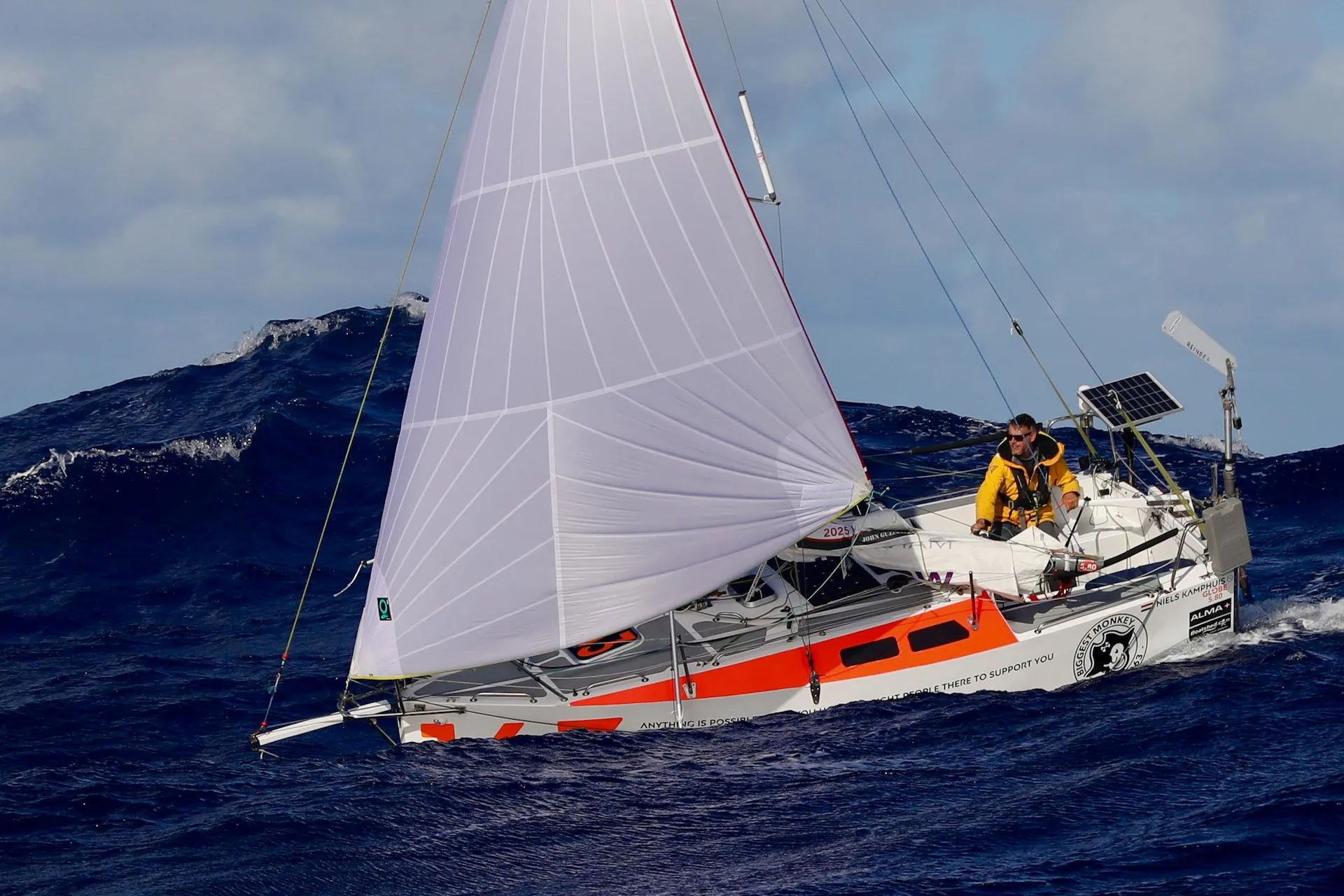
- Steering sensitivity on a highly responsive hull.
- The need to optimize sail trim and weight distribution.
- Selection and adjustment of the air paddle.
- Control-line wear and friction.
- Line tension and possible slack-related dead zones.
- Maintenance and equipment replacement during the race.
The available accounts do not establish a recurring pattern of structural breakage in the principal South Atlantic windvane mechanism. They do, however, show that control-line condition, routing and adjustment are important to achieving effective steering over long periods.
It is therefore important to avoid describing every steering difficulty as a windvane failure. At the same time, control-line and installation requirements remain part of the complete system's performance and must be considered when evaluating its suitability for offshore use.
5. Technical Analysis
5.1 The Class Globe 5.80 as a demanding platform
The Class Globe 5.80 is a small, light and responsive yacht. Its behavior can change rapidly as wind strength, wave direction, sail configuration and loading vary. In such a platform, the forces required to maintain a stable course can change quickly, and a self-steering system may have less margin for error than it would on a heavier yacht with greater directional stability.
A windvane's performance is therefore influenced not only by the product itself, but also by the yacht's yaw response, lateral resistance, rudder characteristics, sail balance and speed through the water.
This context is essential when interpreting reports of over-correction, steering sensitivity or difficulty maintaining a downwind course.
5.2 Auxiliary rudder and servo-pendulum principles
Hydrovane uses an independent auxiliary rudder. The windvane controls this rudder directly, so the system does not rely on the same control-line transmission to the yacht's main rudder as a servo-pendulum system.
A servo-pendulum system, such as Windpilot and South Atlantic, uses an underwater blade that is deflected by the wind-sensing mechanism. Water flow acting on the blade generates steering force, which is transmitted through lines to the yacht's rudder or tiller.
Both arrangements have advantages and limitations, and their effectiveness depends on the yacht and installation. An auxiliary-rudder arrangement requires appropriate structural support and careful attention to rudder alignment and movement. A servo-pendulum arrangement depends on adequate water flow, efficient control-line transmission and compatibility with the yacht's steering geometry.
The race accounts demonstrate that neither principle is immune to operational challenges. They also show that the type of problem may differ according to the design and integration of the system.
5.3 Steering sensitivity and over-correction
Several competitors reported over-correction or difficulty maintaining a stable course in large or confused seas. This behavior can arise when the steering system responds to changes in apparent wind and yacht motion in a way that produces repeated course corrections rather than settling on a stable heading.
On a small, responsive yacht, wave-induced yaw and roll can cause rapid changes in apparent wind angle. If the boat is poorly balanced, the steering system may be required to counter substantial yawing moments. The resulting steering activity can reduce speed and increase fatigue.
Possible adjustments include:
- Improving sail balance and reducing excessive weather or lee helm.
- Changing the sail plan to reduce steering loads.
- Adjusting the windvane's sensitivity or response characteristics, where the system permits.
- Optimizing the air-paddle size and setup.
- Improving the yacht's directional stability through suitable use of appendages and loading.
These adjustments are not interchangeable across systems and should follow the relevant manufacturer's guidance. The accounts from the race illustrate practical adaptations, but they do not constitute a controlled comparison of steering response.

5.4 Environmental interference
The Windpilot accounts particularly illustrate the effects of environmental and layout interference.
For an air vane to sense apparent wind correctly, it needs an unobstructed airflow path. Solar panels, rigging, sails or other equipment can create turbulence or block the wind, depending on their position relative to the vane.
Likewise, a servo-pendulum blade needs suitable water flow. Seaweed or other floating material can foul the blade, while turbulence from the hull, rudder or daggerboards can disturb the flow and reduce steering effectiveness.
These factors are not unique to one brand. They are considerations for any system whose operation depends on airflow or hydrodynamic force. A careful assessment of the intended mounting position is therefore important before installation.
5.5 Control-line circuit as part of the system
For servo-pendulum systems, the steering circuit is a critical element. Its function is to transmit the movement generated by the underwater blade to the yacht's steering mechanism with minimal delay and loss.
Poor routing, unnecessary friction, slack, stretch or chafe can reduce the precision of this transmission. On a small yacht, compact geometry may make efficient routing especially important.
The South Atlantic accounts involving Sunbear and Skookum make this point particularly relevant. Line wear and tension adjustments should be documented as control-circuit issues unless there is evidence that the windvane's main mechanical components were themselves defective.
This distinction does not make the control circuit unimportant. A windvane that cannot transmit its steering input effectively will not deliver satisfactory self-steering, regardless of the condition of its main mechanism.
5.6 Installation and structural integration
The Hydrovane accounts highlight the structural and installation demands associated with mounting an independent auxiliary rudder. The transom must withstand the forces transmitted by the rudder assembly, and the mounting arrangement must allow the components to move freely as intended.
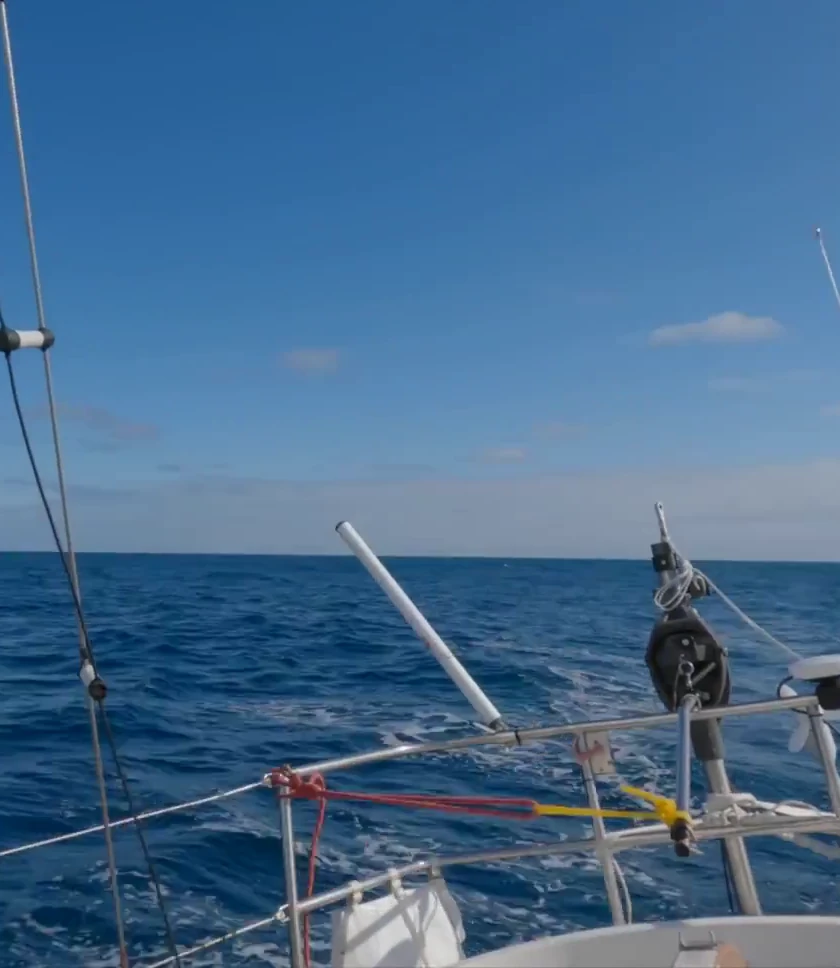
Binding, misalignment or excessive clamping pressure can impair movement. Structural reinforcement may be required depending on the yacht's construction and the loads expected.
Servo-pendulum systems also require careful installation. Their mounting must be secure and appropriately aligned, while the underwater blade should be positioned to operate in suitable water flow. The control lines must then be led to the steering mechanism without unnecessary friction or interference.
The race provides examples of mounting and layout issues, but does not supply enough standardized engineering data to compare the structural loads or safety margins of the different manufacturers' installations.
5.7 Maintenance and repairability
Long-distance solo sailing places a premium on equipment that can be inspected, maintained and repaired at sea. The race incidents show the consequences of lost components, structural damage, line wear, fouling and alignment problems.
A prudent offshore maintenance plan should include:
- Checking fasteners, mounting points and moving components.
- Inspecting control lines and blocks for wear, chafe and alignment.
- Confirming that rudders, paddles and linkages move freely.
- Checking that the air vane has a clear airflow path.
- Removing environmental fouling when safe to do so.
- Carrying suitable spares and tools for the system and installation.
- Rechecking adjustments after major changes in sail plan, loading or equipment layout.
The specific maintenance requirements will depend on the system, its age, its installation and the conditions in which it is used. The accounts reviewed here reinforce the value of preventive inspection and the ability to diagnose the actual source of a problem before making adjustments at sea.
6. Comparative Summary
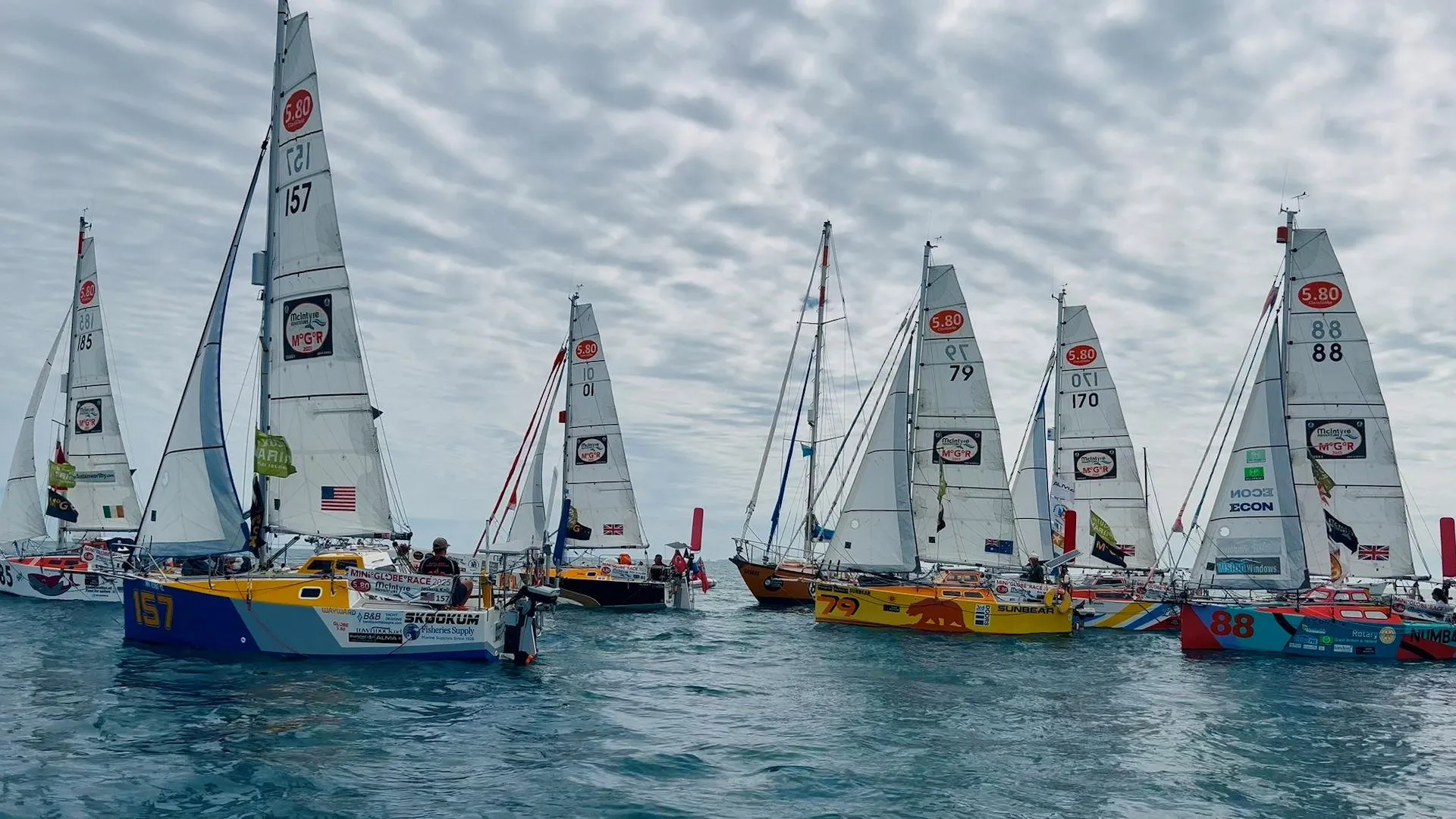
The table below summarizes the types of issues described in the available race accounts. It is not a quantitative reliability ranking. The number of documented incidents is affected by the number of boats using each system, the detail available in published reports and differences in operating conditions.
| System | Reported cases | Main reported challenges | General classification |
|---|---|---|---|
| Hydrovane | Ertan Beskardes (Trekka), Jasmine Harrison (Numbatou), Dan Turner (Immortal Game), Renaud Stitelmann (Capucinette), Pilar Pasanau (Peter Punk) |
|
A mix of mechanical, structural, installation and performance-related issues |
| Windpilot | Jakub Ziemkiewicz (BIBI), Christian Sauer (Argo) |
|
Primarily environmental, layout, mounting and operational challenges in the documented cases |
| South Atlantic | Adam Waugh (Little Wren), Eric Marsh (Sunbear), Josh Kali (Skookum) |
|
Primarily configuration, control-circuit and maintenance-related challenges in the documented cases |
6.1 Interpreting the comparison
The available reports suggest differences in the types of challenges experienced, but do not support a definitive ranking of overall product reliability.
Hydrovane users reported a wider range of incident types in the source material, including mechanical and structural problems, installation binding and course-keeping difficulties. Windpilot users mainly reported interference associated with the environment and the yacht's layout, along with a mounting alignment issue. South Atlantic users mainly described steering sensitivity and the importance of maintaining and optimizing the control-line circuit, sail balance and settings.
These distinctions are useful for understanding the incidents, but should not be interpreted as a complete measure of each system's performance. A fair comparison would require consistent data about fleet numbers, total operating time, maintenance interventions, installation quality, failure definitions and the severity of conditions encountered.
7. Conclusions
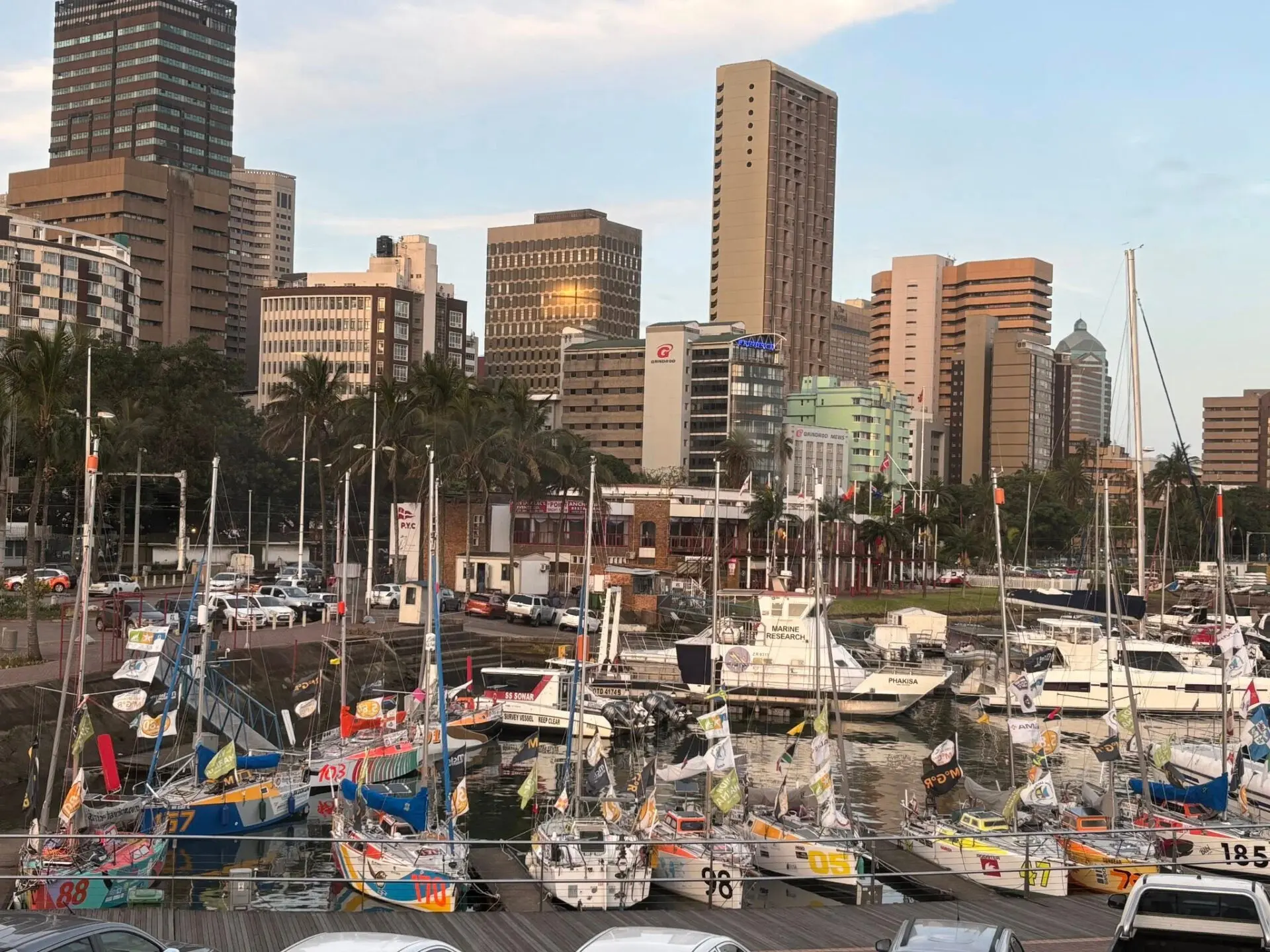
The race as a demanding test
The 2025–2026 McIntyre Mini Globe Race demonstrated how demanding long-distance solo sailing can be for self-steering equipment installed on small, light and highly responsive yachts.
Performance is shaped by the whole system
The reported experiences show that windvane performance is shaped by the interaction of the mechanism with the boat's hull, steering arrangement, sail plan, loading, installation geometry and surrounding conditions. A system may be mechanically intact yet deliver poor course-keeping if the yacht is unbalanced, the airflow is obstructed, the underwater blade is fouled or the steering circuit is inefficient.
Distinct patterns by system
The Hydrovane cases included mechanical component loss, structural damage, installation-related binding and steering sensitivity. The Windpilot cases primarily highlighted environmental fouling, airflow and water-flow interference, and mounting alignment. The South Atlantic cases primarily highlighted steering sensitivity, sail and weight balance, and the importance of efficient, well-maintained control-line arrangements.
Operational difficulty is not mechanical failure
A key conclusion is that operational difficulty should not automatically be equated with mechanical failure. In particular, control-line wear, friction, stretch and tension are part of the complete servo-pendulum steering installation, but they are not necessarily evidence of a defect in the windvane's principal mechanism. Similarly, steering sensitivity or over-correction may reflect the combined behavior of the yacht, sail plan, sea state and steering settings.
Value of preparation and adaptation
The race also underlined the value of preventive maintenance, careful installation, suitable spares and a skipper's ability to diagnose problems and adapt the setup. These considerations apply to all three systems.
Case studies, not a controlled test
Ultimately, the evidence available from the race is best treated as a set of valuable operational case studies rather than a controlled product test. It offers practical lessons for sailors choosing, installing and maintaining windvane self-steering systems, while leaving any definitive comparison of long-term reliability to more comprehensive and standardized data.
Sources and further reading
- McIntyre Mini Globe Race
- Hydrovane
- Windpilot
- South Atlantic
- Practical Boat Owner — Windvane self-steering guide
- Practical Boat Owner — Globe 5.80 performance review
- McIntyre Mini Globe Race — Race timeline