
Pre-stretched Polyester vs. Dyneema® SK78 and SK99 for Windvane Self-Steering
The choice of line used in a windvane self-steering system is important to ensure accurate motion transmission, reliable steering response, and good durability during sailing.
The line must withstand the loads transmitted by the mechanism, the variable stresses caused by the movement of the vessel, and the repeated bending at the guide points. It must also maintain a stable length, offer predictable behaviour, and resist the wear produced by contact with sheaves and other components.
Pre-stretched polyester and Dyneema® show important differences in these respects. Within the Dyneema® family, the SK78 and SK99 grades offer different combinations of strength, stiffness, and fatigue behaviour.
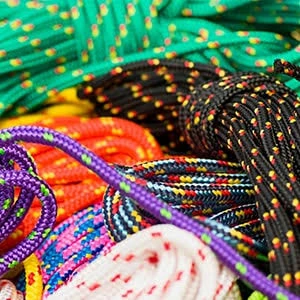
1. Breaking strength
Pre-stretched polyester offers adequate strength for many nautical applications, but Dyneema® allows considerably higher breaking loads to be achieved at the same diameter.
In an 8 mm line, indicative values may fall within the following ranges, depending on the manufacturer and construction:
- Pre-stretched polyester: approximately 1,400–1,600 kg.
- Dyneema® SK78: approximately 5,000–6,300 kg.
- Dyneema® SK99: up to approximately 8,000–11,200 kg in specific high-performance constructions.
This difference provides a considerable strength margin without increasing the line diameter. However, in a windvane self-steering system it is not enough to simply choose the material with the highest strength: it is also necessary to consider the actual loads transmitted by the mechanism, the strength of the anchor points, the sheaves, and the terminations.
Note: Breaking strength must not be confused with the allowable working load. The values above are indicative and must be verified in the technical data sheets of each product.
2. Elongation and precision of motion transmission
In a windvane self-steering system, the elongation of the line can influence the precision with which the motion from the steering mechanism is transmitted.
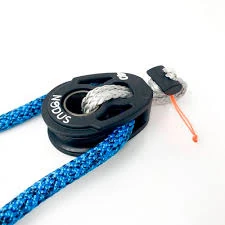
Pre-stretched polyester has been subjected to a tensioning process during manufacture to reduce subsequent elongation. Even so, it retains some elasticity and may stretch when the load increases, particularly under sudden pulls or sharp variations in effort.
Dyneema® shows much lower elongation under comparable loads. This allows more direct transmission of motion and reduces variations in line length when tension changes.
Between the two grades considered:
- Dyneema® SK78: combines very low elongation with good strength and suitable behaviour for applications subjected to repeated loads.
- Dyneema® SK99: offers higher specific strength and an elastic modulus approximately 35% higher than SK78 in certain comparisons.
A higher elastic modulus means that the line deforms less under the same relative tension. This can be advantageous when seeking a particularly stiff motion transmission.
However, the actual response also depends on the line construction, its length, the terminations, and the applied load. None of these materials completely eliminate deformation.
3. Weight and handling
Dyneema® has an approximate density of 0.97 g/cm³, lower than that of water, so the fibre without coatings or additional elements can float. Polyester has a density higher than that of water.
In a windvane self-steering system, the weight difference between the two materials is usually less decisive than in lines located aloft, such as halyards. However, the low weight of Dyneema® can make handling easier and reduce the mass of the transmission system itself.
For this application, strength, dimensional stability, and durability under load cycles are usually more important criteria than weight reduction alone.
4. Flexibility for making eyes through splicing
Dyneema® allows eyes to be made through splicing when its construction is suitable for this procedure.
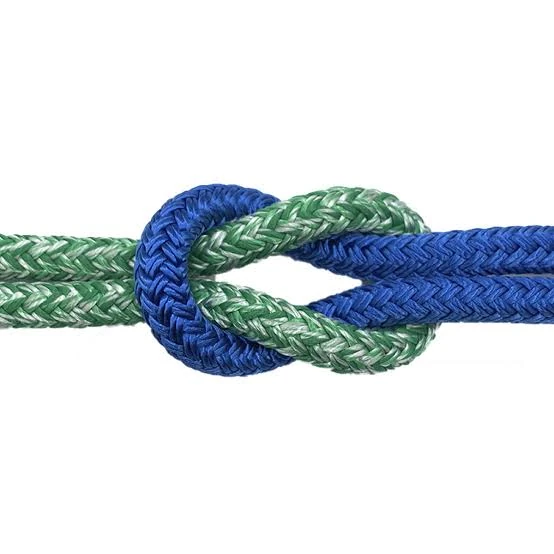
A well-executed splice can retain a very high proportion of the original strength of the line. The result depends on the type of braid, the splice length, and the manufacturer's instructions.
In a windvane self-steering system, compact and well-executed terminations help achieve reliable connections between the line and the mechanism components.
Conventional knots can considerably reduce the strength of a line, so it is important to choose the appropriate type of termination. Not all Dyneema® lines allow the same type of splice to be made; the procedure corresponding to each construction must be followed.
5. External abrasion resistance
During the operation of the windvane, the line may rub against sheaves, guides, and other components. Abrasion resistance is therefore an important aspect of its durability.
Dyneema® has a low friction coefficient and good abrasion resistance in many applications. However, it is not immune to wear and may suffer damage if it works over sharp edges, rough surfaces, or unsuitable elements.
Polyester also offers good abrasion resistance and, when it has an appropriate cover, can provide useful outer protection.
In both materials, durability will depend on:
- The diameter and condition of the sheaves.
- The contact pressure and line tension.
- The frequency and angle of bending.
- The presence of sharp edges or abrasive surfaces.
- The construction of the line and the protection of its fibres.
For a windvane self-steering system, it is especially important to avoid the line working over damaged surfaces or with insufficient bend radius.
6. Flex fatigue and repeated loads
The line of a windvane self-steering system can experience continuous cycles of tension and relaxation, as well as repeated bending as it passes through sheaves. These conditions can cause internal friction between the fibres, heating, and progressive loss of strength.
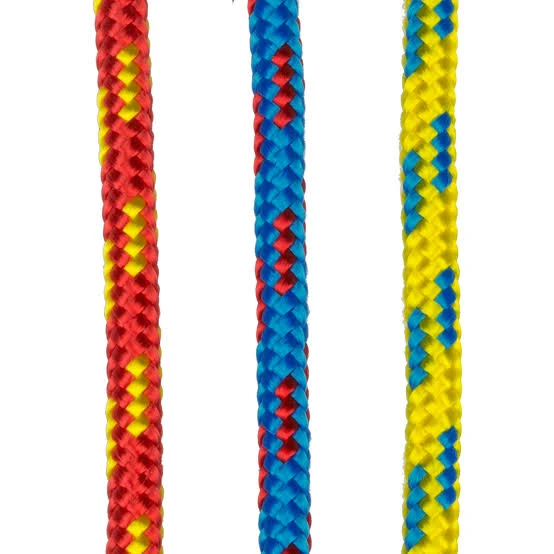
Dyneema® SK78
SK78 shows good behaviour against flex fatigue and is an interesting option for applications subjected to repeated loads. Its combination of strength, low elongation, and flex behaviour may be especially suitable for the continuous movements of a windvane self-steering system.
Dyneema® SK99
SK99 offers higher specific strength and greater stiffness in certain comparisons. However, higher breaking strength does not automatically imply longer life under repeated flexing.
For a windvane self-steering system, where continuity of movement may be more important than achieving the maximum breaking load, it is advisable to check the fatigue specifications of the specific line before choosing this grade.
Pre-stretched polyester
Polyester combines flexibility and elasticity, but shows higher elongation than Dyneema®. It can be a valid alternative when the loads are within its limits and cost, grip, and ease of replacement are prioritised.
In any of the materials, the sheave diameter, the adjustment of the mechanism, and the absence of abnormal friction directly influence the life of the line.
7. Behaviour in clamps, guides, and fixing points
Compatibility between the line and the clamping elements is essential to prevent slippage and ensure that the windvane transmits the motion correctly.
Polyester, especially when it has a suitable cover, usually offers good grip in conventional locking systems.
Dyneema® has a more slippery surface, so it is necessary to check that the clamping system is compatible with the chosen diameter and construction. In some cases, a grip cover or specific solution can improve the behaviour of the assembly.
Important: It must not be assumed that higher line strength compensates for an inadequate clamp or a weak fixing point.
8. Comparison table: 8 mm lines
The strength values are indicative. The final selection must be based on the specifications of the specific line and the characteristics of the windvane self-steering system.
| Characteristic | Pre-stretched polyester | Dyneema® SK78 | Dyneema® SK99 |
|---|---|---|---|
| Indicative breaking load | 1,400–1,600 kg | 5,000–6,300 kg | Up to 8,000–11,200 kg in specific constructions |
| Elongation under load | Low, but noticeable | Very low | Very low |
| Transmission stiffness | Moderate | High | Very high in suitable products |
| Weight | Relatively high | Low | Low |
| Flex fatigue | Depends on construction | Good behaviour in suitable applications | Must be verified for the specific product |
| Abrasion resistance | Good, especially with appropriate cover | Good, depending on construction and conditions | Good, depending on construction and conditions |
| Grip in clamping systems | Generally good with appropriate cover | Requires compatibility check | Requires compatibility check |
| Splicing possibility | Depends on line type | Very good in suitable constructions | Very good in suitable constructions |
| Application in windvane self-steering | Economical alternative for compatible loads | Balanced option for repeated loads | Option for applications that justify its higher strength and stiffness |
9. South Atlantic recommendation for windvane self-steering
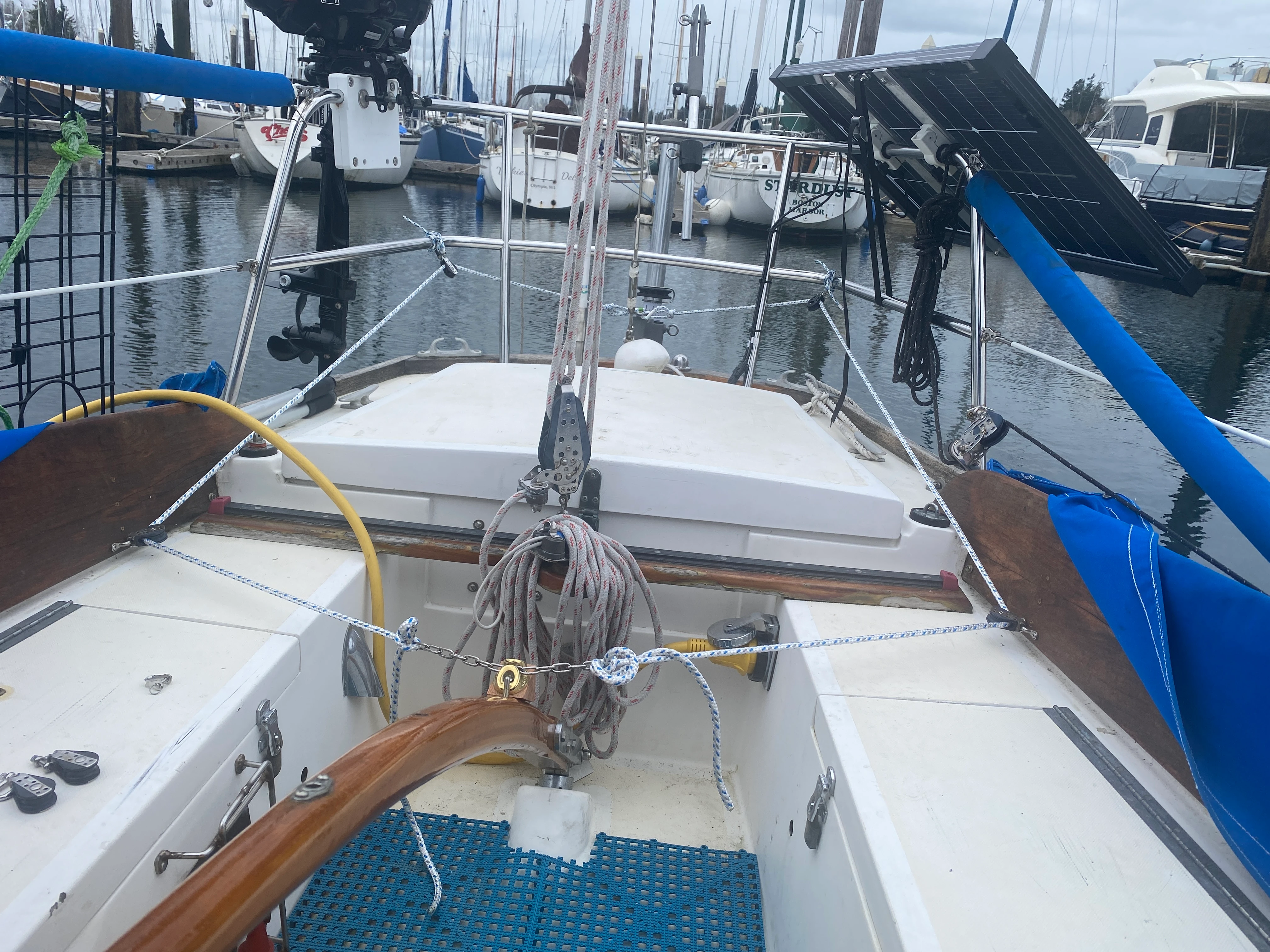
Official recommendation
For the lines used in windvane self-steering systems, South Atlantic recommends covered Dyneema® SK78, as it offers a balanced combination of strength, low elongation, and durability under nautical use conditions.
During sailing, these lines are subjected to variable stresses, pulls, and repeated cycles of tension and relaxation. In addition, they may work continuously on sheaves and other elements of the transmission mechanism.
SK78 offers especially interesting characteristics for this application:
- High strength: provides a wide strength margin in relation to its diameter, provided it is selected in accordance with the actual loads of the system.
- Low elongation: promotes precise transmission of motion and helps maintain a stable length under load.
- Good behaviour under repeated flexing: suitable for mechanisms that work continuously and whose lines pass through sheaves.
- Additional protection thanks to the cover: an appropriate cover can protect the internal fibres against rubbing and surface wear. Its effectiveness will depend on the material and construction of the line.
- Good balance between performance and durability: offers a particularly interesting balance for a component that must function reliably during long passages.
Why covered SK78 instead of SK99?
Although SK99 can offer higher specific strength and stiffness, these advantages do not necessarily mean it is the best choice for a windvane self-steering system.
In this application, breaking load is not the only thing that matters. Repeated flexing, wear, fibre protection, and long-term reliability are also important.
For this reason, South Atlantic considers that covered Dyneema® SK78 is the preferred option for this use, provided the diameter, construction, and cover are suitable for the design of the windvane self-steering system.
Note: The cover does not make the line immune to abrasion nor does it eliminate the need for inspection. It is also important to use sheaves in good condition, avoid sharp edges, and respect the bend radii recommended by the manufacturer.
Conclusion
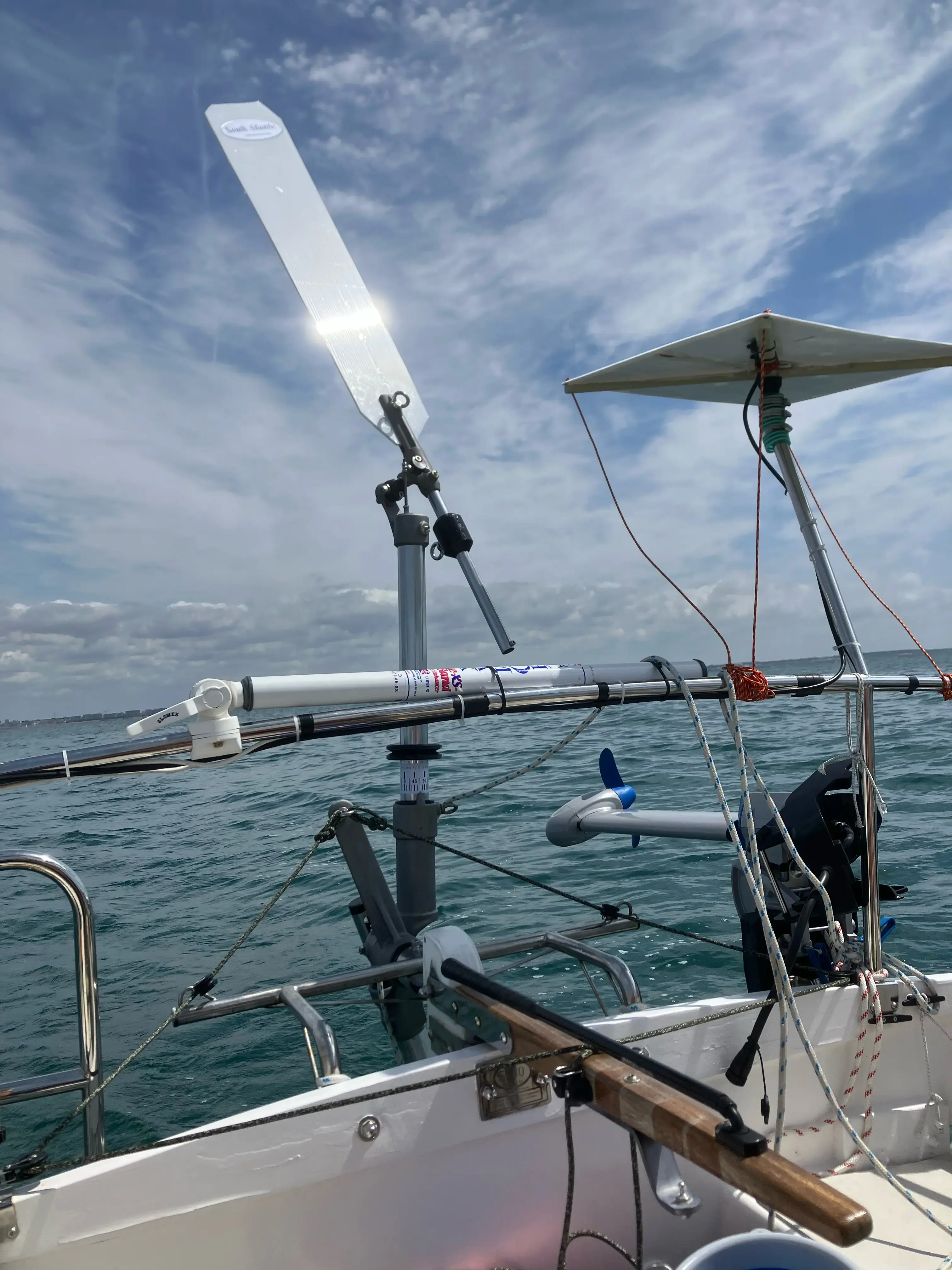
Final recommendation
For South Atlantic windvane self-steering systems, we recommend covered Dyneema® SK78 as a balanced solution for transmitting the movements of the steering system with reduced elongation and good resistance to repeated loads.
Instead of choosing exclusively the line with the highest breaking load, we consider it preferable to prioritise the combination of strength, flexibility, protection against wear, and durability required by this application.
Important technical note: The strength values mentioned in this article are indicative, but must not be interpreted as universal values for any 8 mm line. In particular, the maximum values attributed to SK99 correspond to specific constructions and must be confirmed in the product data sheet.
Sources and further reading
- South Atlantic — S 301 / S 440 / S 470 — Technical data sheets
- DSM Dyneema® — Technical specifications SK78 and SK99
- Practical Boat Owner — Guide to lines and windvane self-steering
- South Atlantic — Technical information on steering circuits
- Nautical applications of Dyneema® and pre-stretched polyester